We went diving in Guadeloupe, a French island (read: colony) in the Carribean sea.
The Carribean, because we had never dived here before but why Guadeloupe? The story is- we had the map open and I placed my finger on an island and said, let’s go… here!
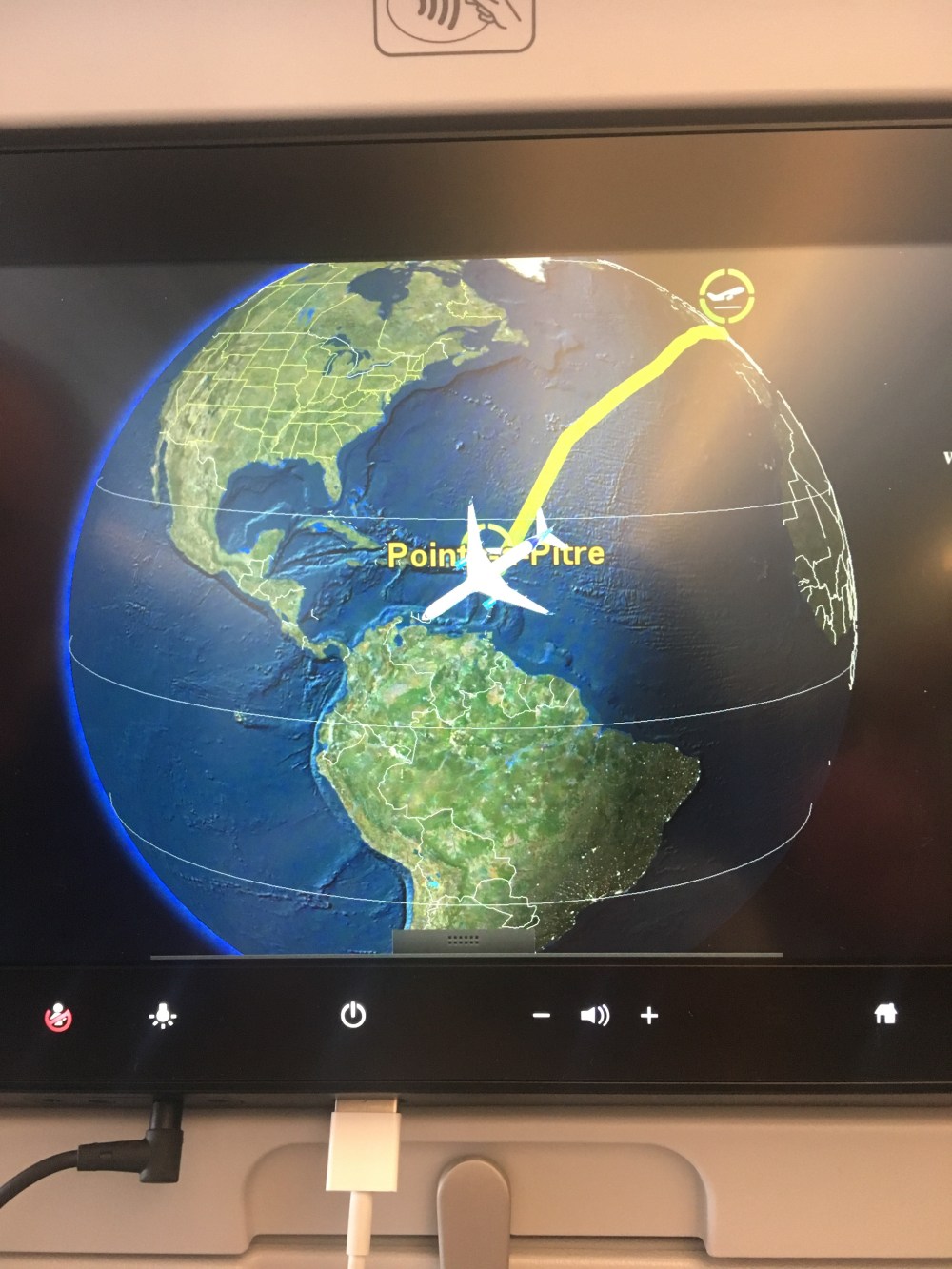 Another bunny quickly realized it was Guadeloupe, which is part of France, so no visas required and direct flights. This also meant everything was going to be in French. I passed my diving exam in French, how bad could it be?
It was not so bad actually. I just felt like a retarded child at times, who could only smile and sing Bon jour, Bon soir. People would quickly realise my retardness, but spoke to me in French nevertheless. Some white people spoke some English like, ‘ello, ca va?, good-bye, and zee you. The people were nice and accommodating.
You know a place is not touristy when people are nice to tourists.
Anyway, going a step back. As soon as we landed in Guadeloupe, we were greeted with big signs saying “protect yourself from mosquitoes causing Chicken guinea, Dengue, Zika, etc.”. Ugh. So, first thing, we headed straight to the airport pharmacy, which had an aisle full of different anti mosquito products. With the strongest mosquito repellant bought, and therepaeutic doses of gin and tonic each day, we decided we were going to be OK.
We started driving on a dark windy road that went through the middle of a rainforest (the temperature was 6 dg C cooler than the last town we passed) to the village where we were going to stay, called “Pigeon”. There was not much of a view from our house, just more darkness. So, I thought whatever, we are facing trees. Next morning, however, we were very plesantly surprised :D. This was our view:
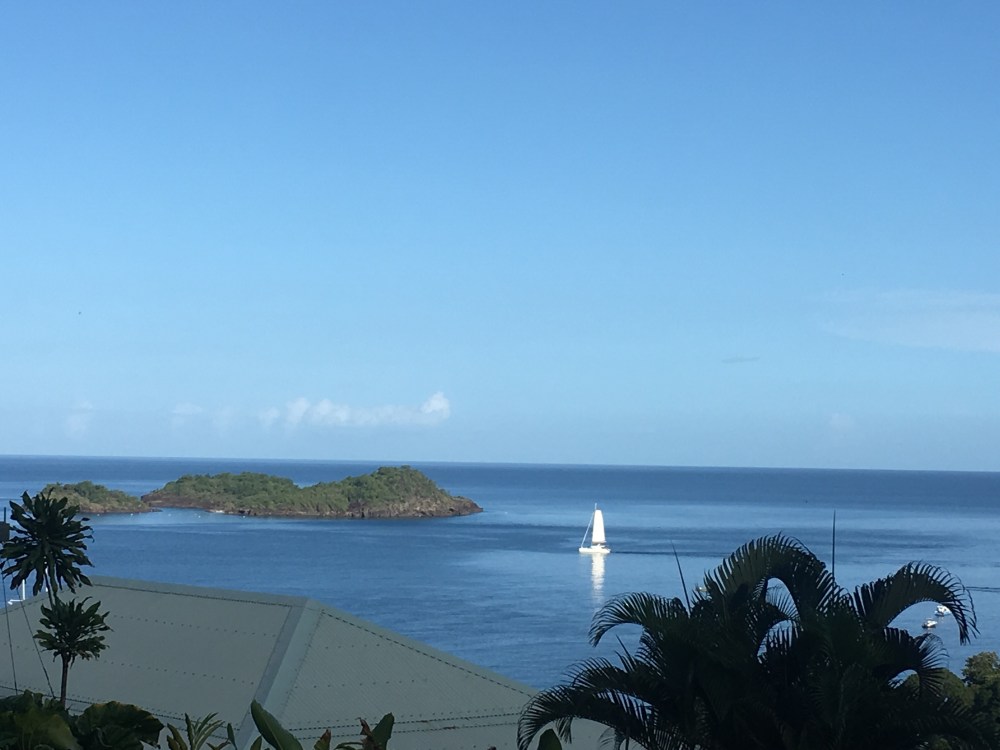
This is the power of negative thinking, you can always be positively surprised.
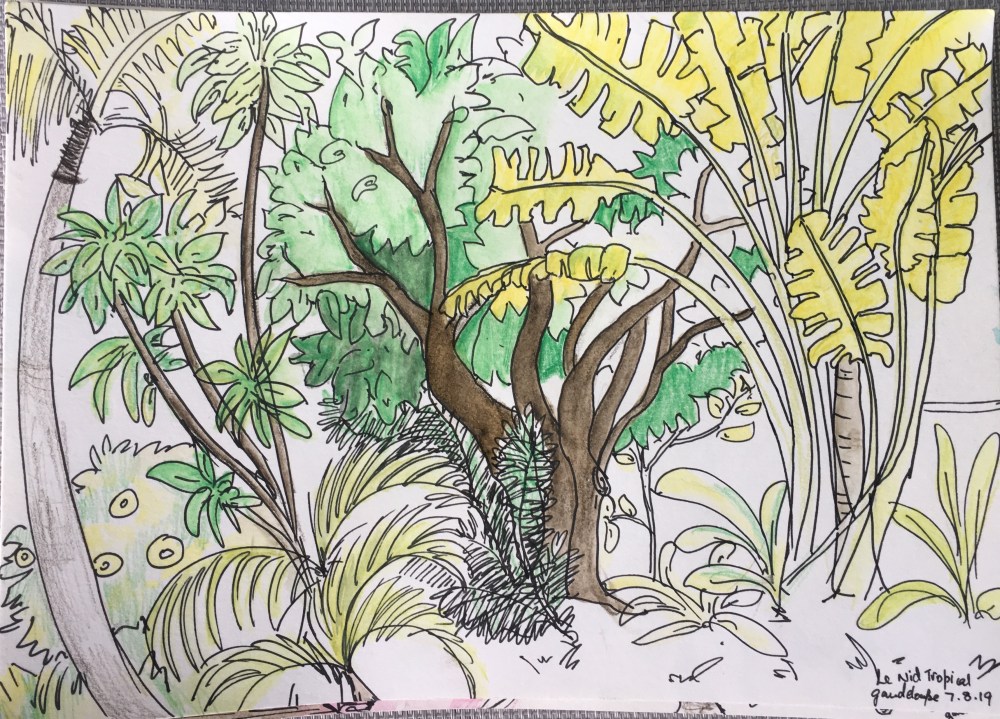
We were staying at the Le nid tropical (the tropical nest):
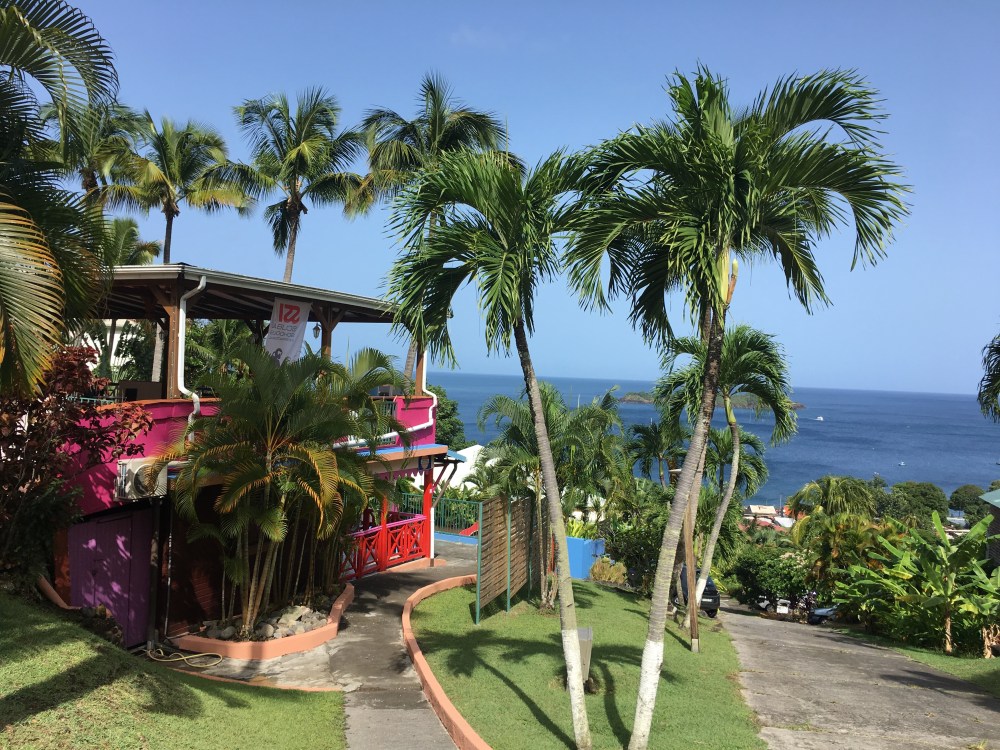

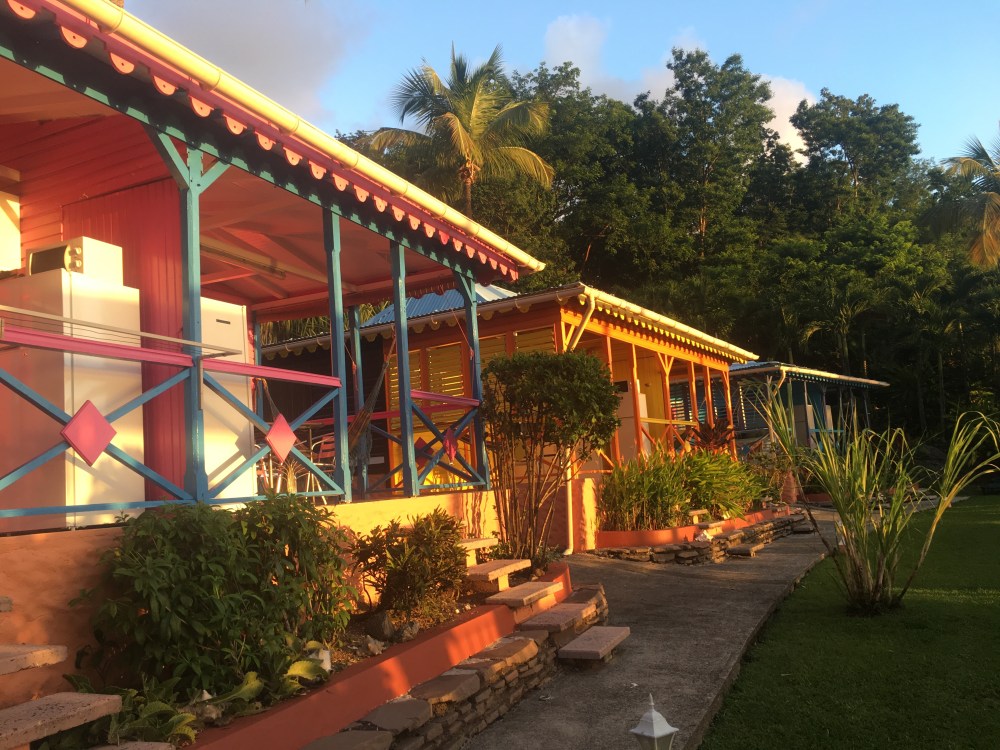
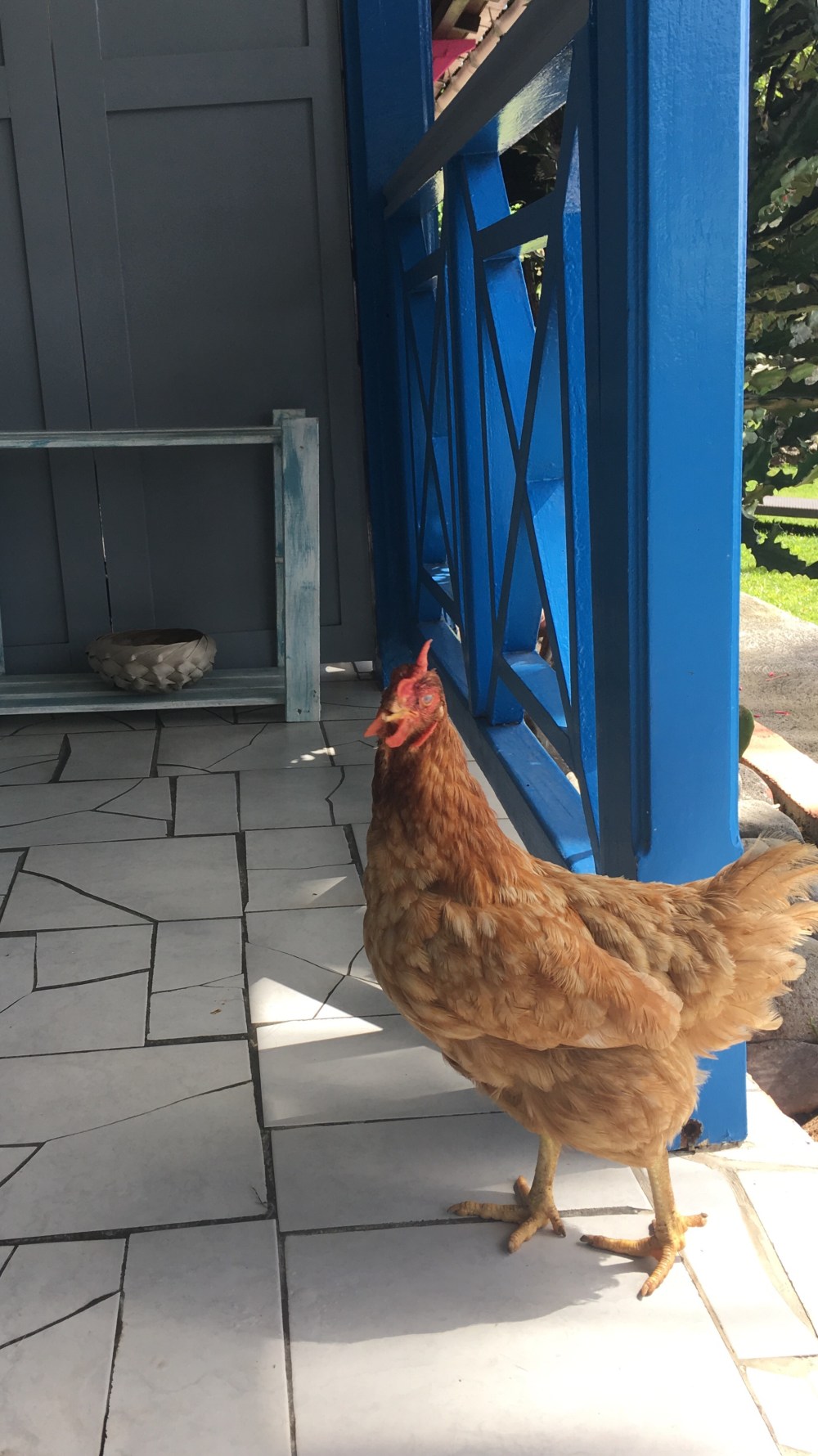
We were sharing our tropical nest with a lot of wildlife. There were the neighbours’ hens who really enjoyed baguettes, lots of colourful birds who also liked baguettes, a fluffy cat (who most probably was also into baguettes), and small lizards which the Swiss bunny would get really excited about, who also btw liked baguettes.
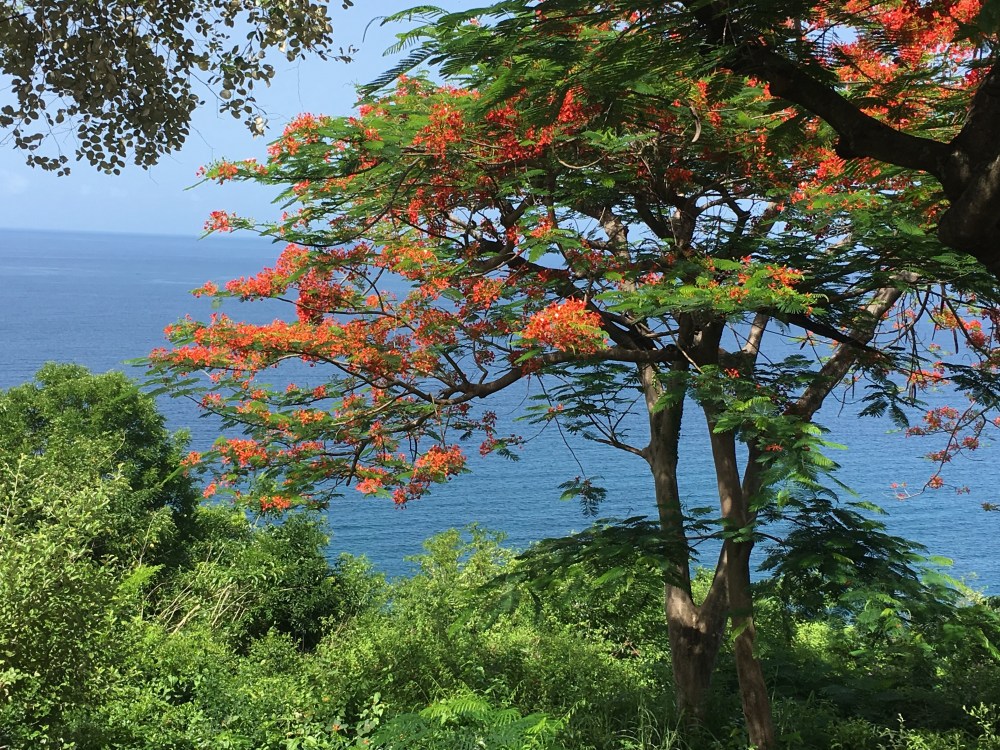
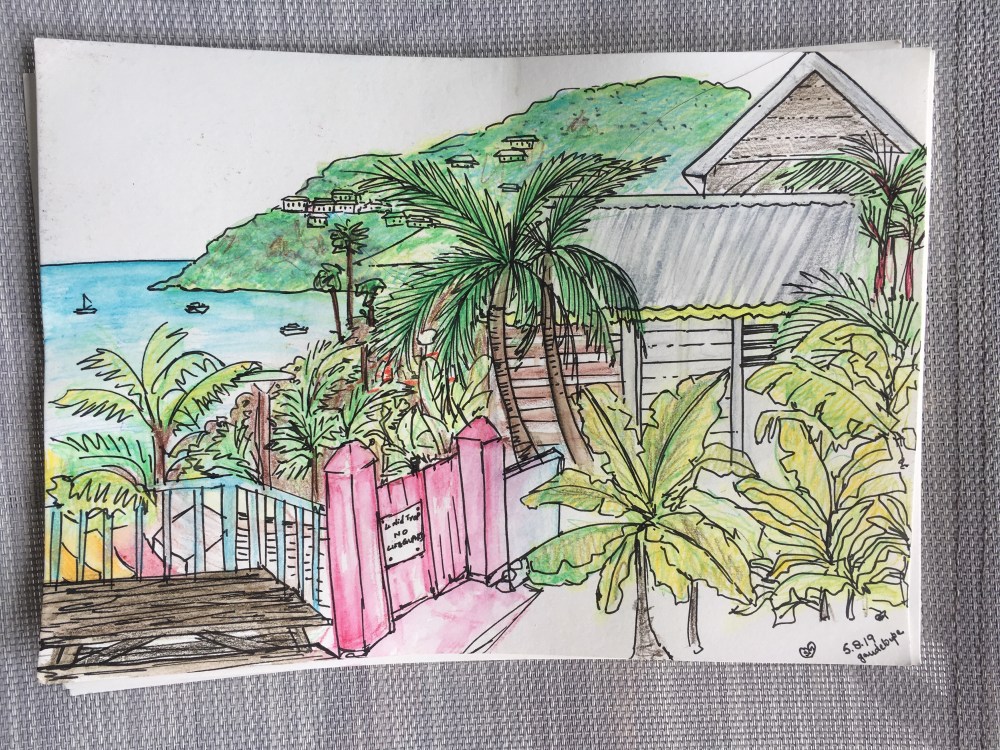
The first day, we went hunting for a ‘not so touristy’ beach the landlord recommended. The way to go there was first a bit nice and then a bit dicey.
Nice part:
Dicey part: a mud track seemingly leading to nowhere with multiple small mudpaths going in every direction. We were a bit lost. 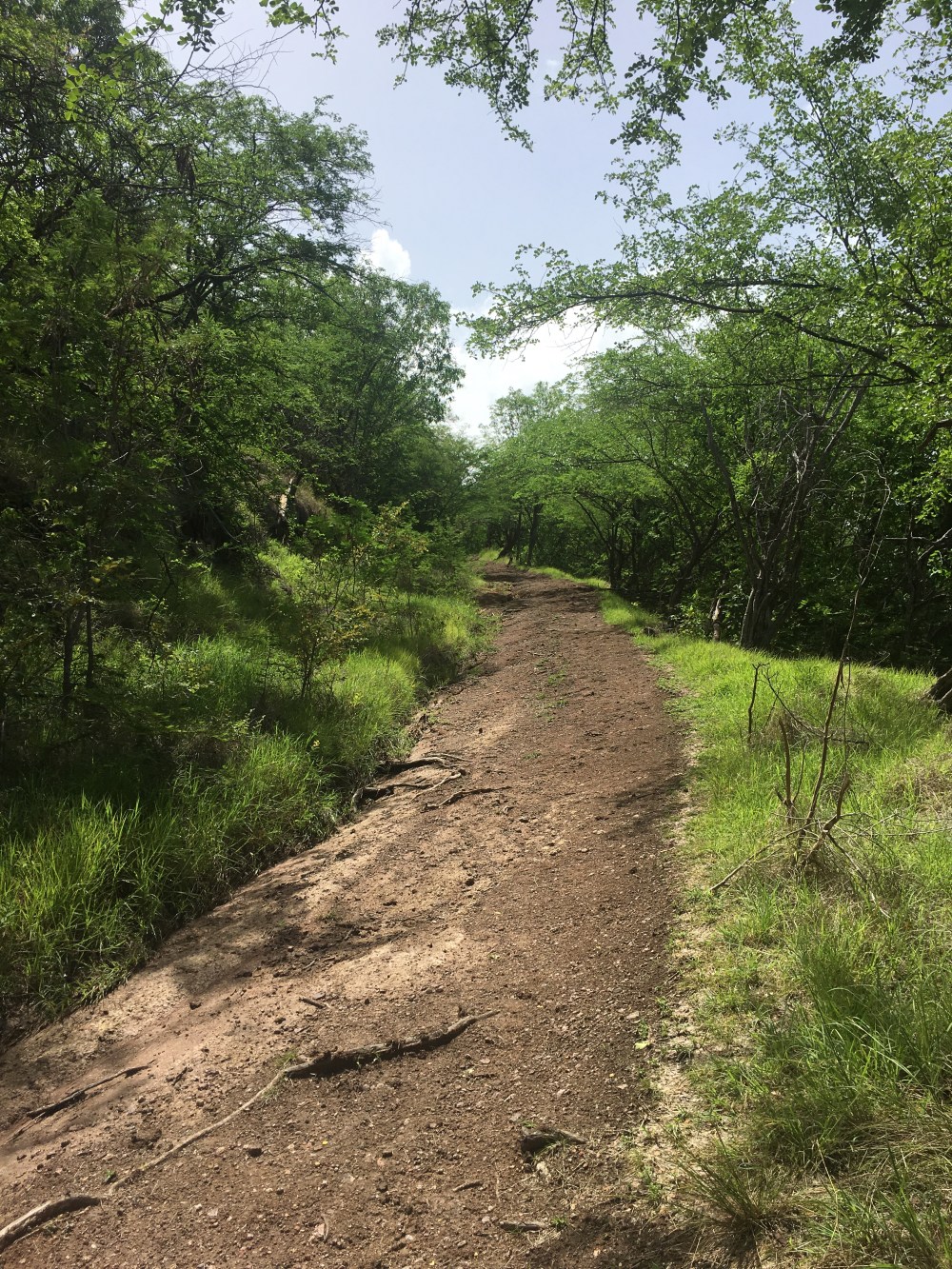
So we sent “Sanjay” to find out where the path led (named Sanjay after the guy in Mahabharat who could “see” the great war hapenning far away). 
With Sanjays’s help we found the beach! Not sure if this was the right beach but it was very quiet and very nice. 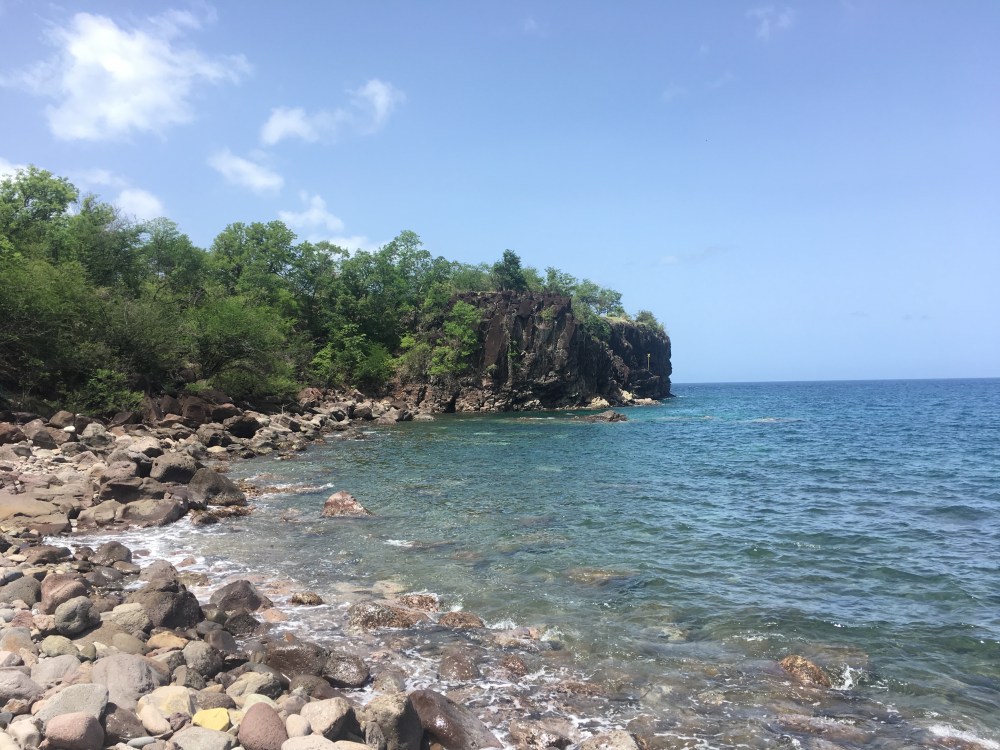
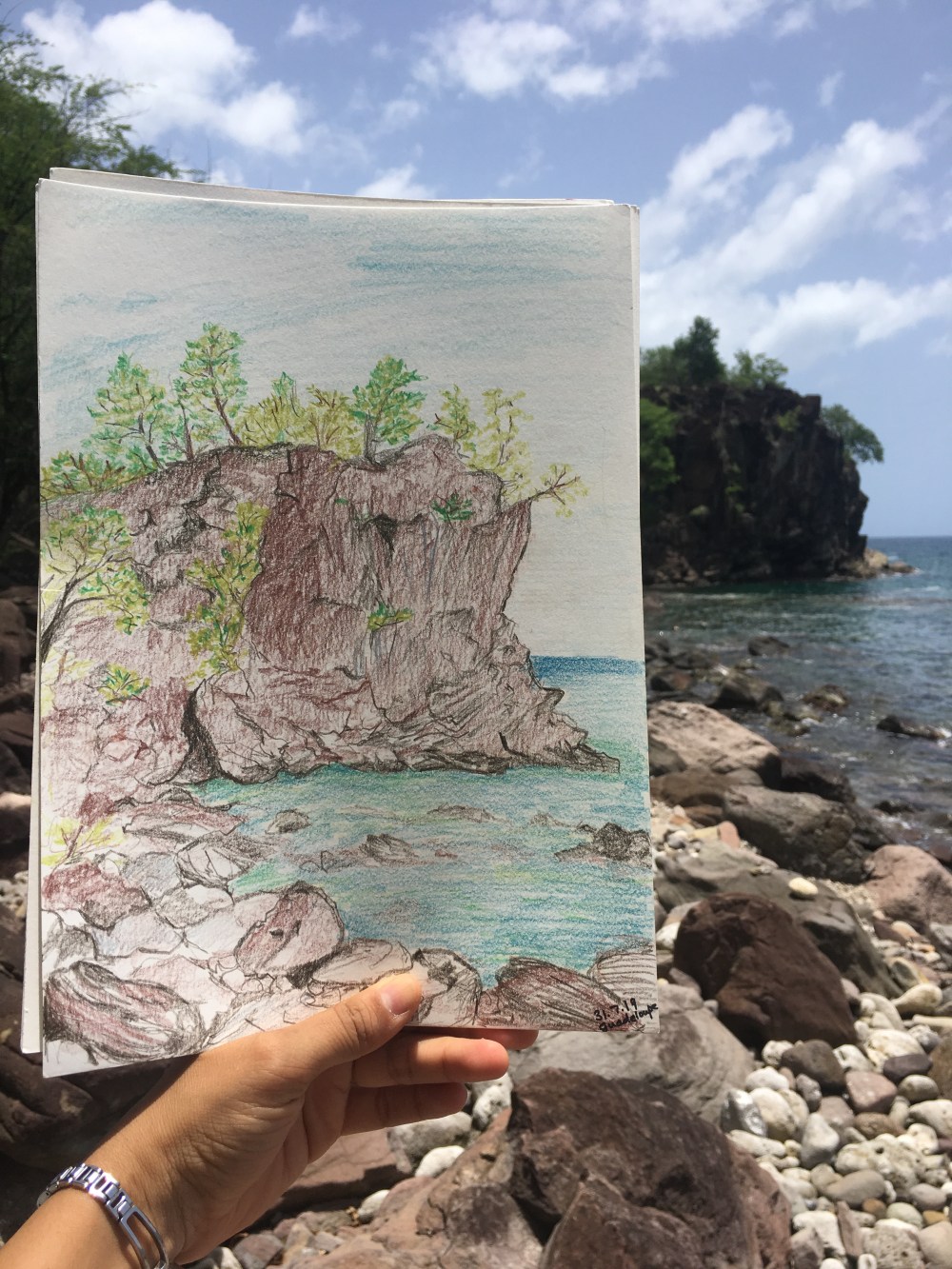
Finished the drawing at home. The first day was a success.

The next day, we had some authentic pain au chocolat and began with our first dives!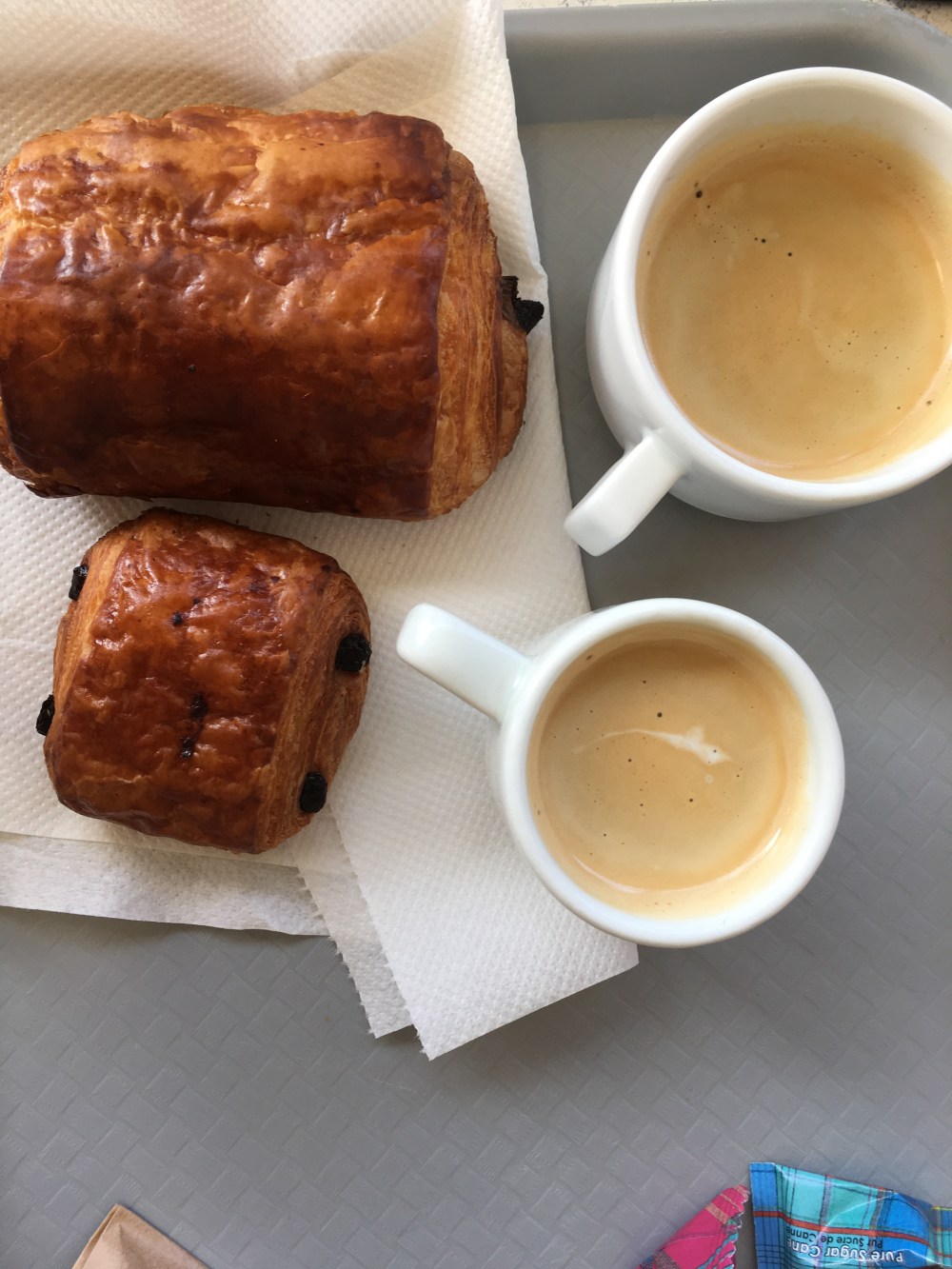
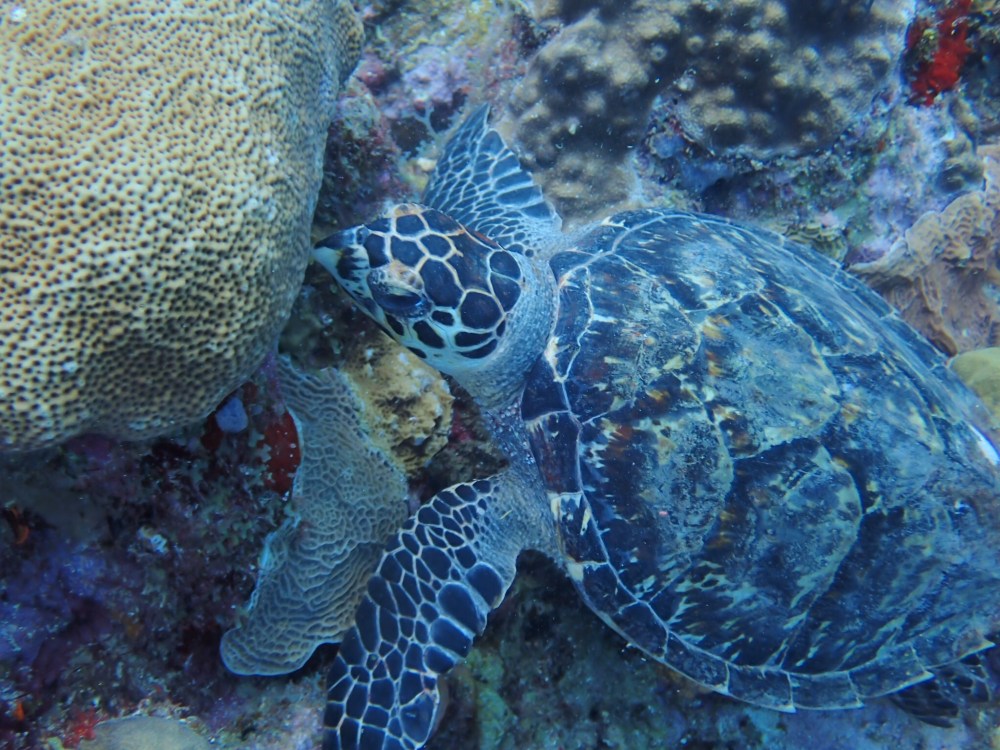
On our very first dive, we saw two turtles. A giant adult and a little one, casually nibbling on coral. They looked like floating corals themselves.
 The next dive at Point des Lezard (lizard in French), there was a lot of surface current. So the dive master told us to go down quickly. I figured after 26 dives that the string on the shoulder of the BCD was for such events. There was a lot of current at the sea bed too. I lost 40 bar pressure in first 5 or so min just swimming against the current. We had to abandon the dive and went to another much gentler site.
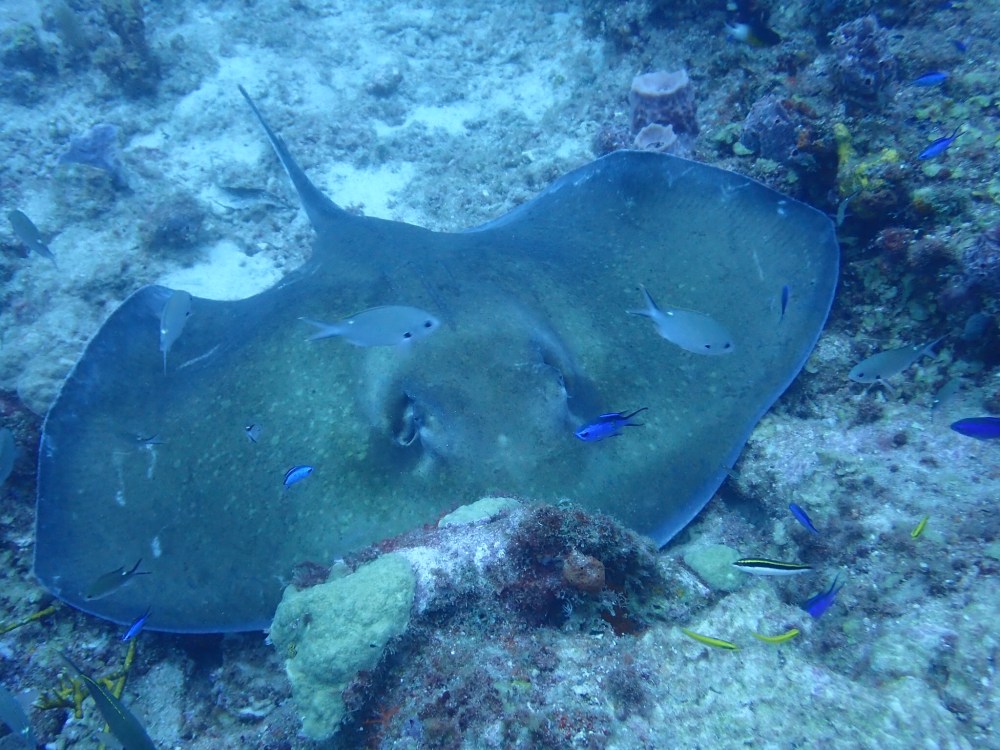
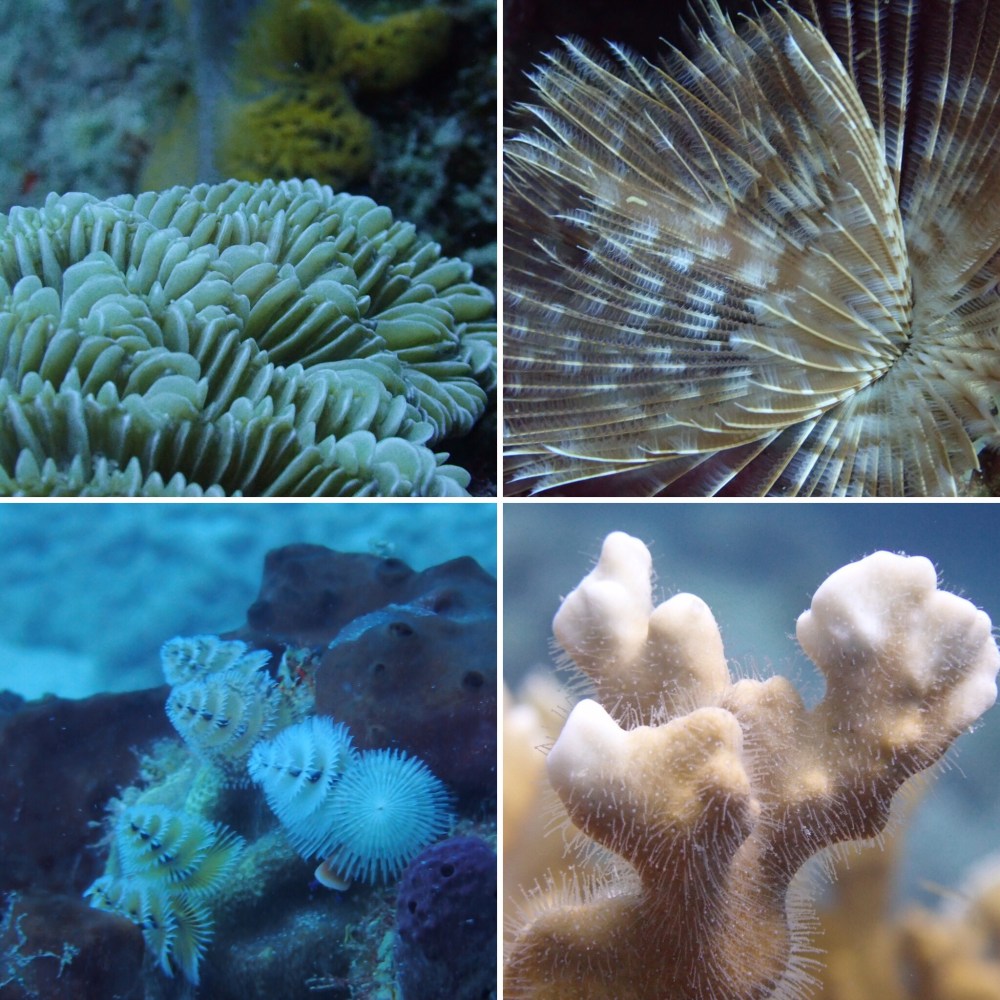
The next few dives in the following days, we saw a giant ray, more than a meter wing span, just lying on the ground, opening and closing its eyes, looking at us, several nice corals and intricate worms.
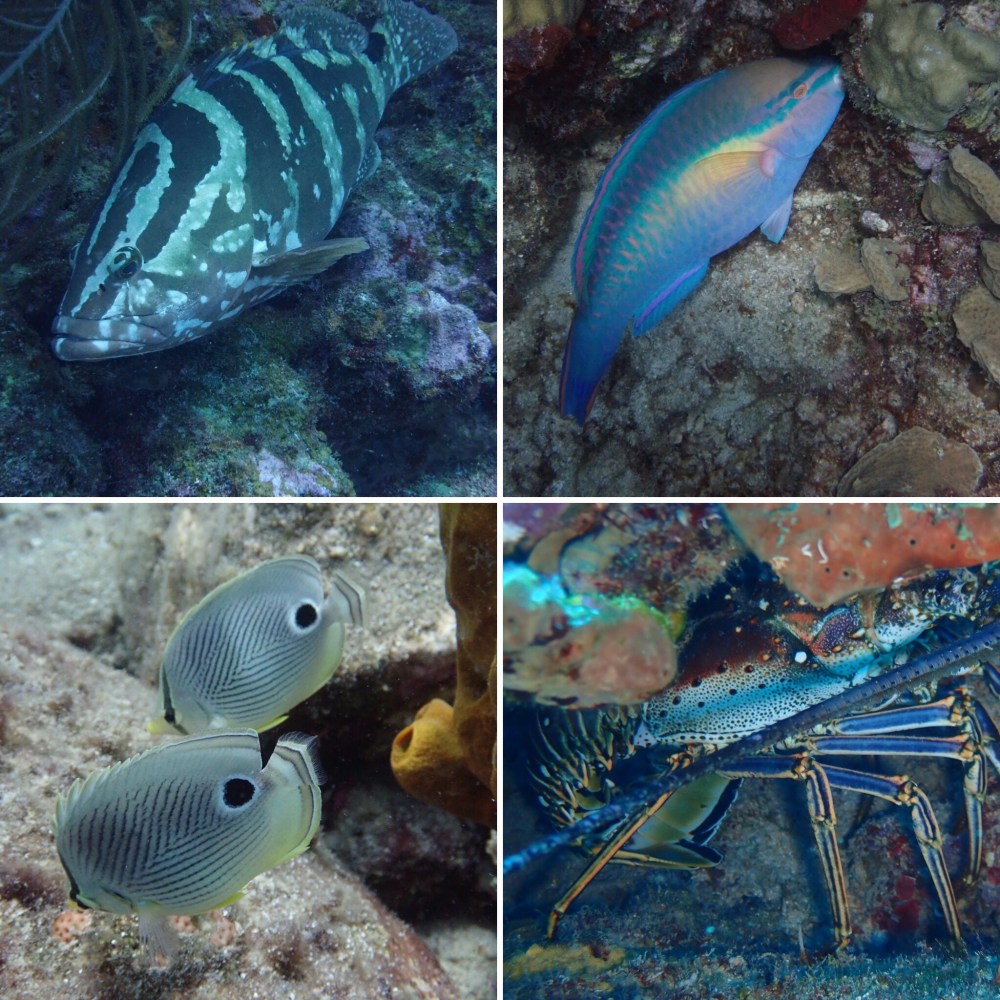
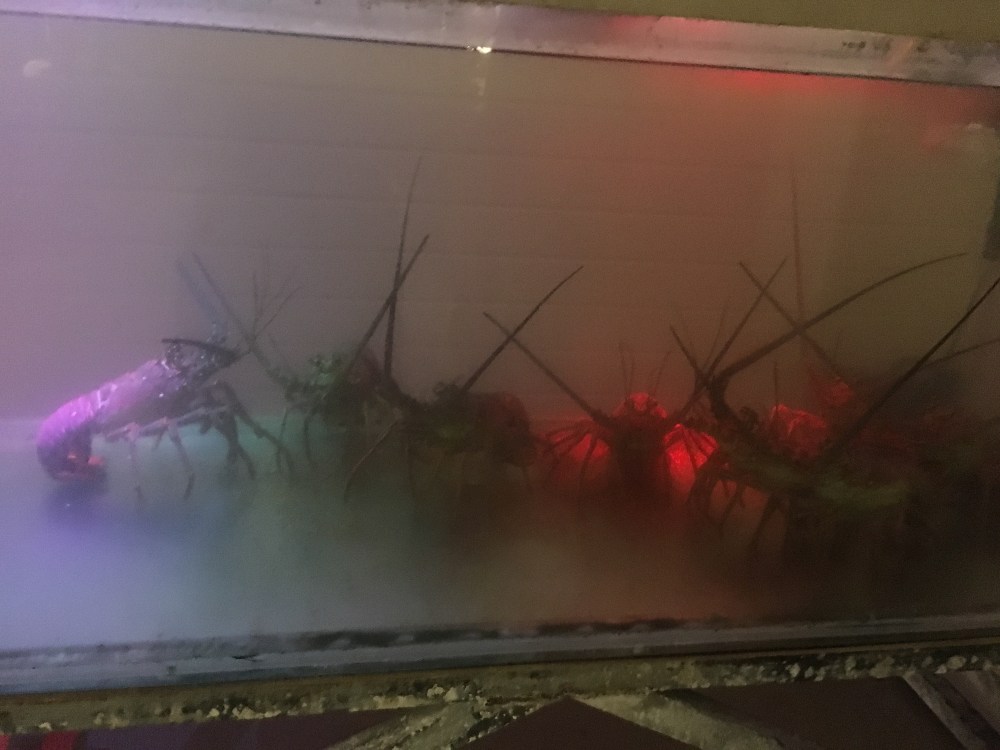
We saw lobsters in the wild (above), and lobsters in a tank (La Touna: bottom). These lobsters (in the tank) were clamoring to get out. It was very sad, so we didn’t order any, but many others in the restaurant did. After starting diving, I appreciate the beauty underwater much more and wondered, do we really have to eat so much fish. Many fish were driven out of these waters because humans ate their babies before they could reproduce!
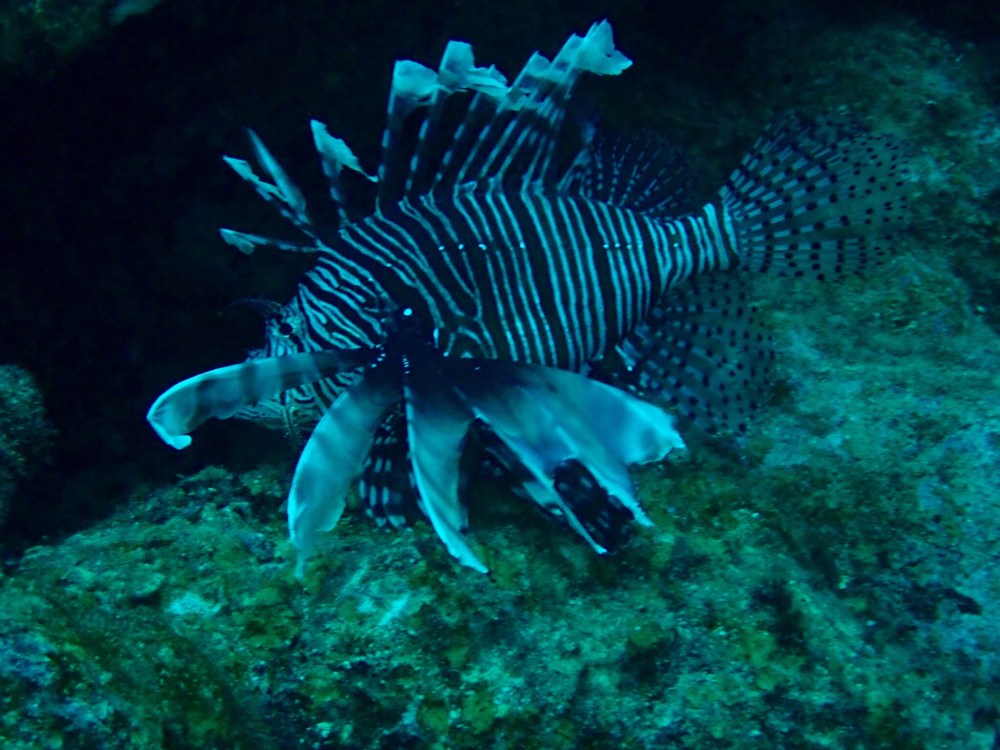
Sorry got sidetracked, back to the sea. We saw several lion fish, swimming in all their glory and arrogance, feathers out. They should be fished, they don’t belong here! These fish are indegenous to the Indian ocean, and got introduced in the Carribean when a tank from an aquarium in Florida tipped into the sea. Having no predators in this part of the world, being able to eat everything, and having a great reproductive ability, allowed these fish to quickly multiply and infest the Carribean sea! They are pests, but they look pretty amazing though.
We saw some more worms, that only underwater photographers find nice:
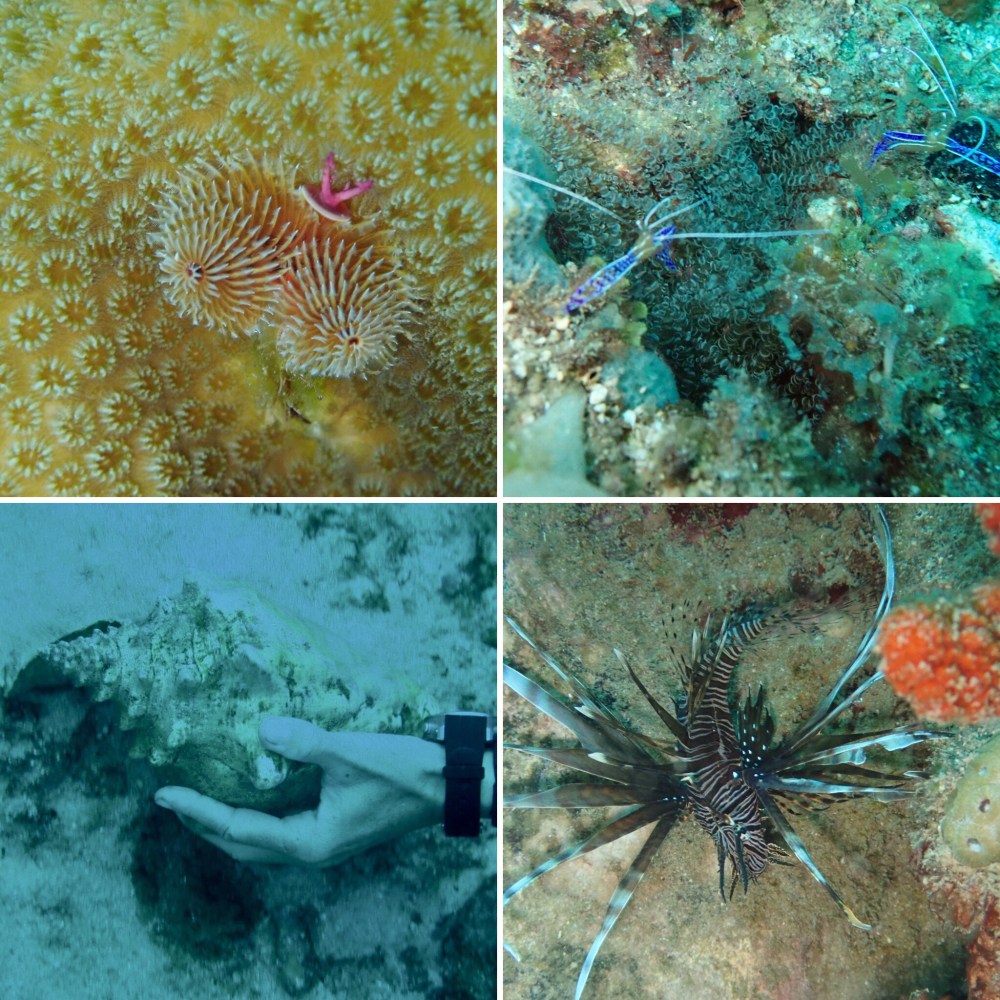 Then we saw a jackfish swimming around really fast (bottom pic, left top), and a cuttle fish up close! Rather it came up close to us. It was quite amazing how this cuttle fish just hovered in the middle of the divers, looking at us (bottom pic, left bottom). It seemed so… intelligent!
We infact saw a school of cuttle fish whose picture is far less underwhelming than who they looked in reality (bottom right in the picture below). 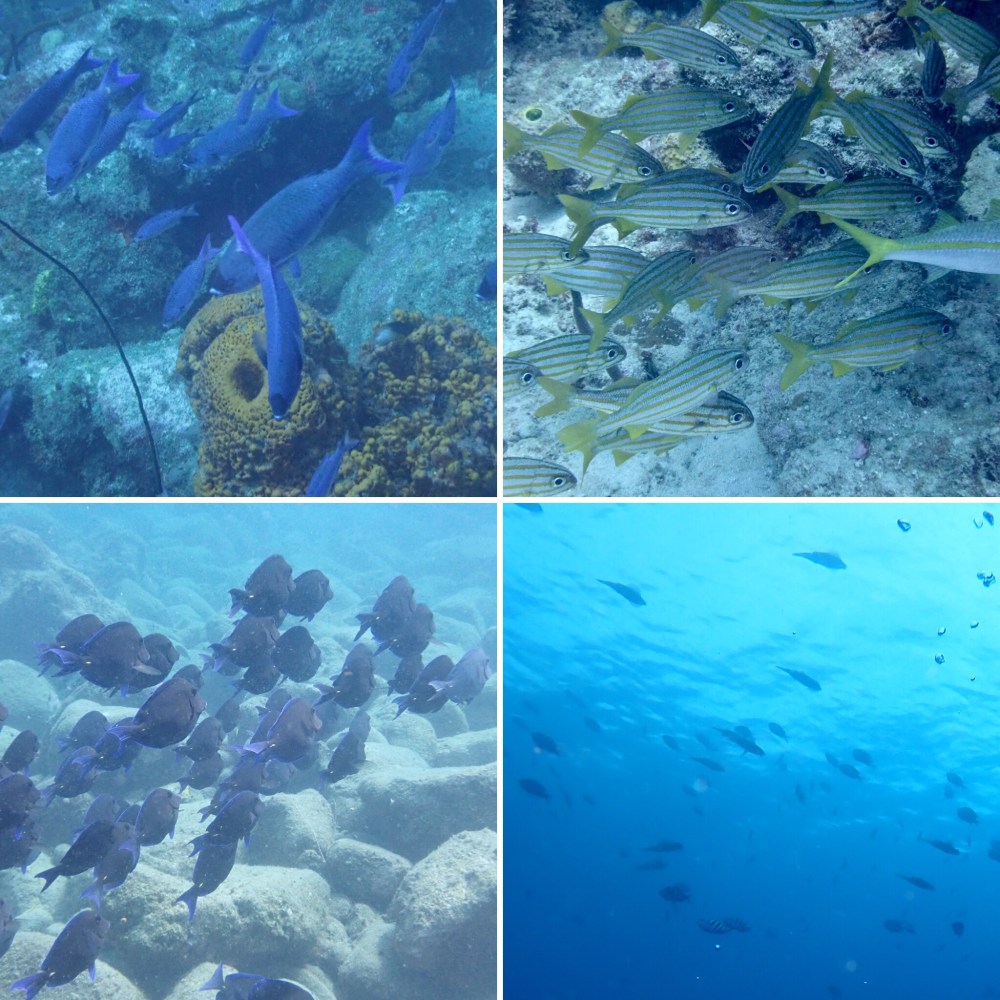 After 6 dives, we took a little break to go see more around the island.
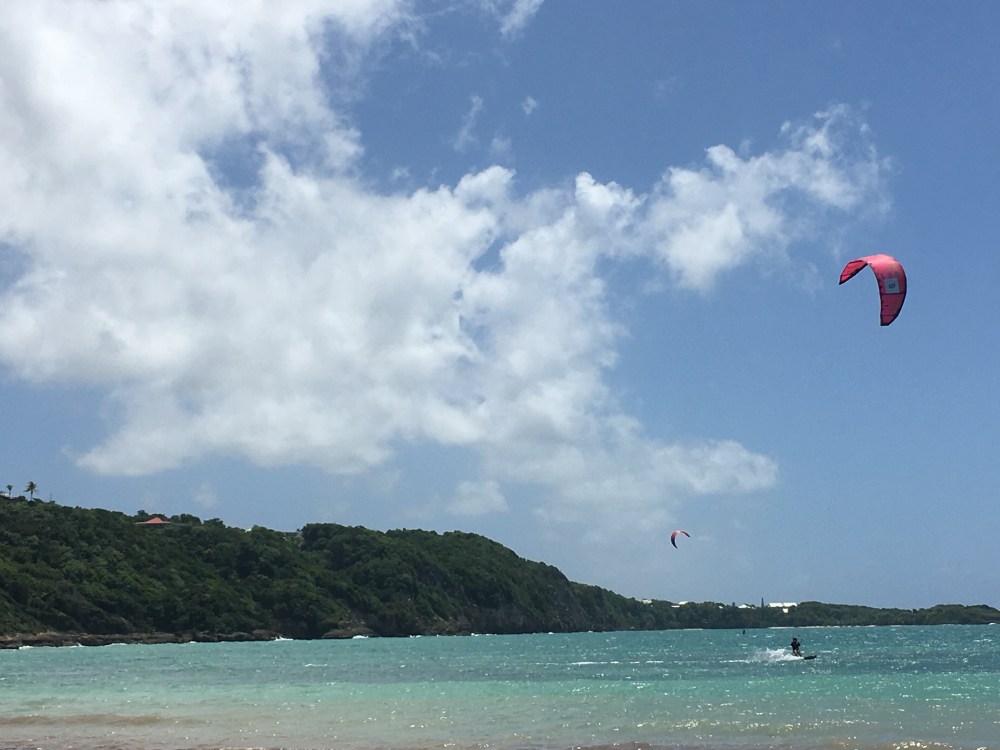
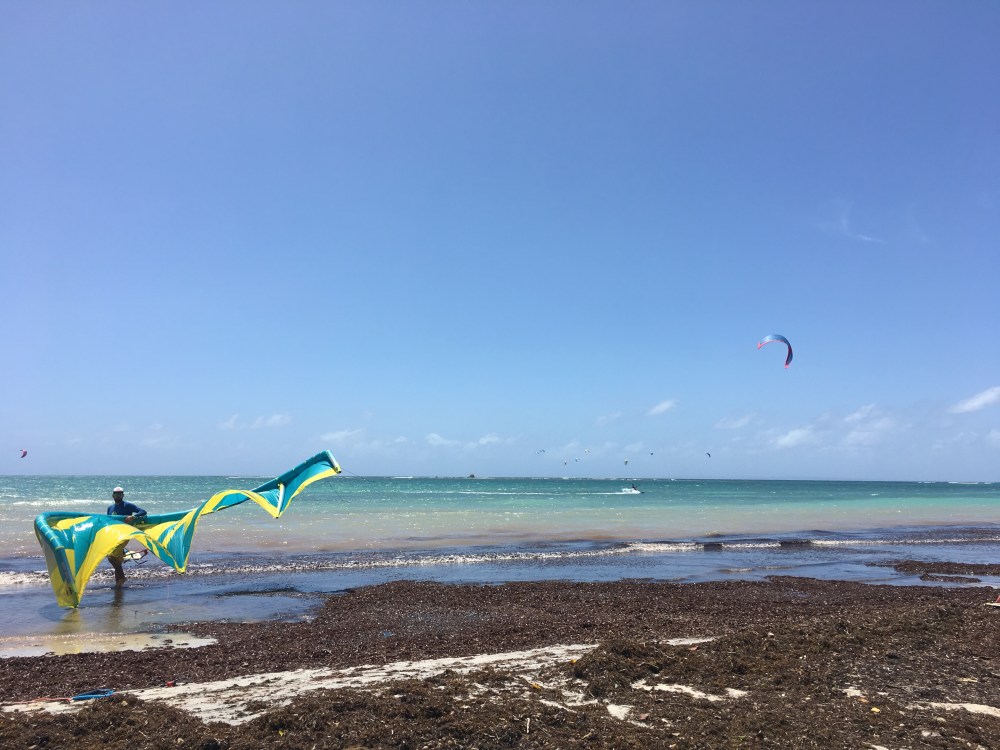
We went to the north east, passing the Plage des Salines, where there were many kite surfers. There was plenty of shade and it was really nice, but there was a lot of sea weed on the shore, so we didn’t stay too long.
Then we went all the way to Pointe des Châteaux. There was no Châteaux here but is incredibly pretty!
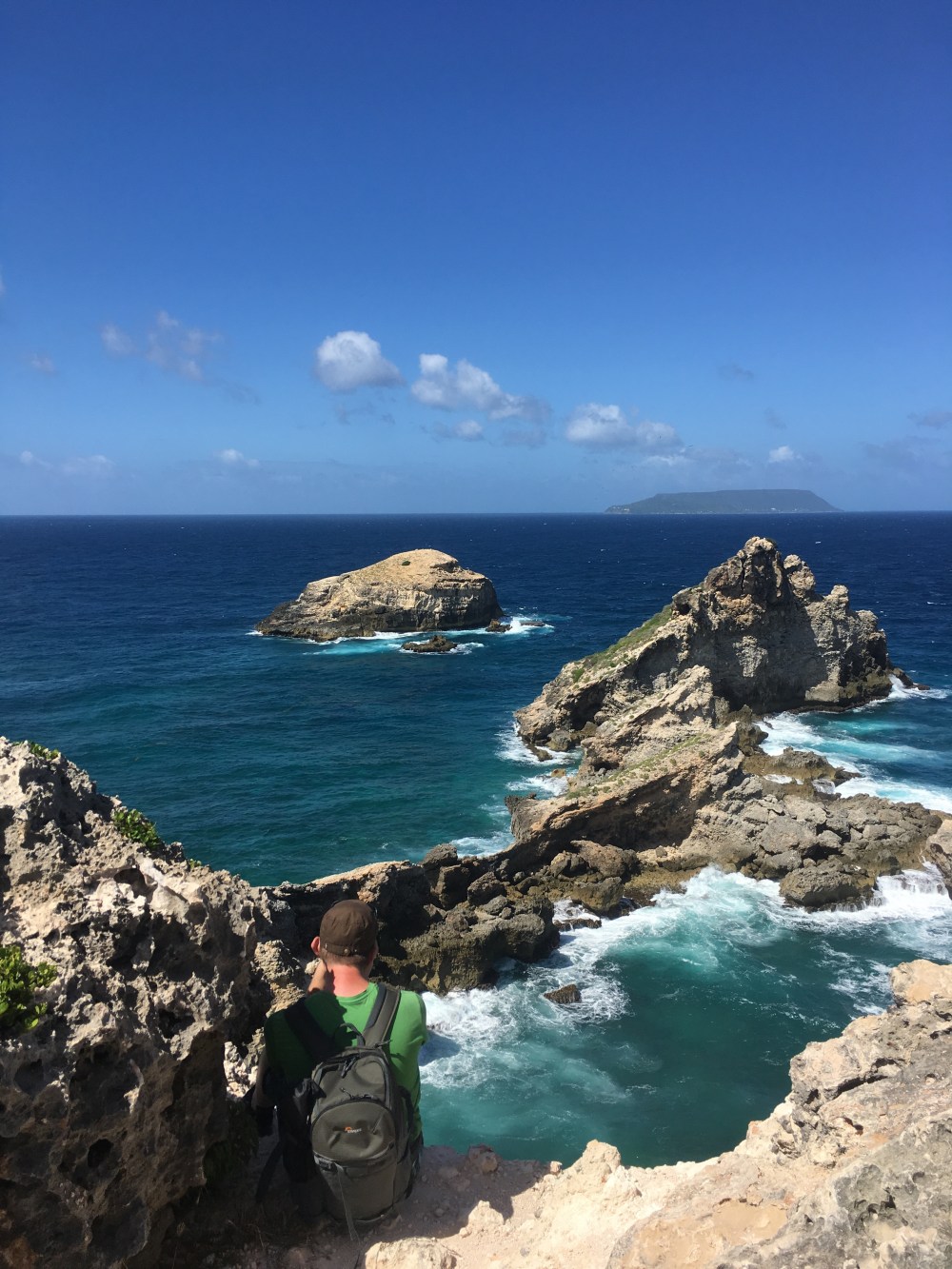
Pictures are no good unless you put yourself in danger : this is the motto of this young man.
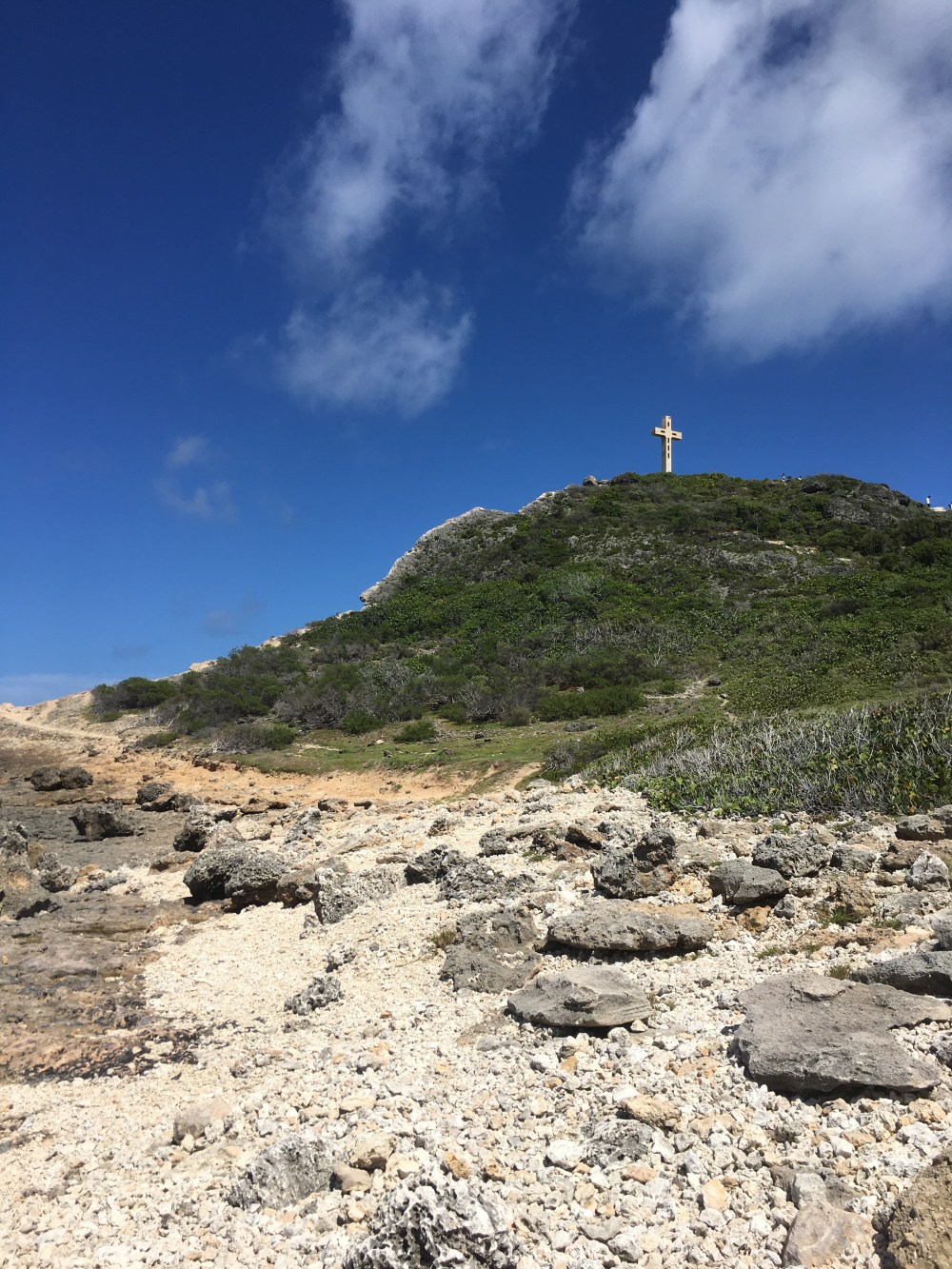
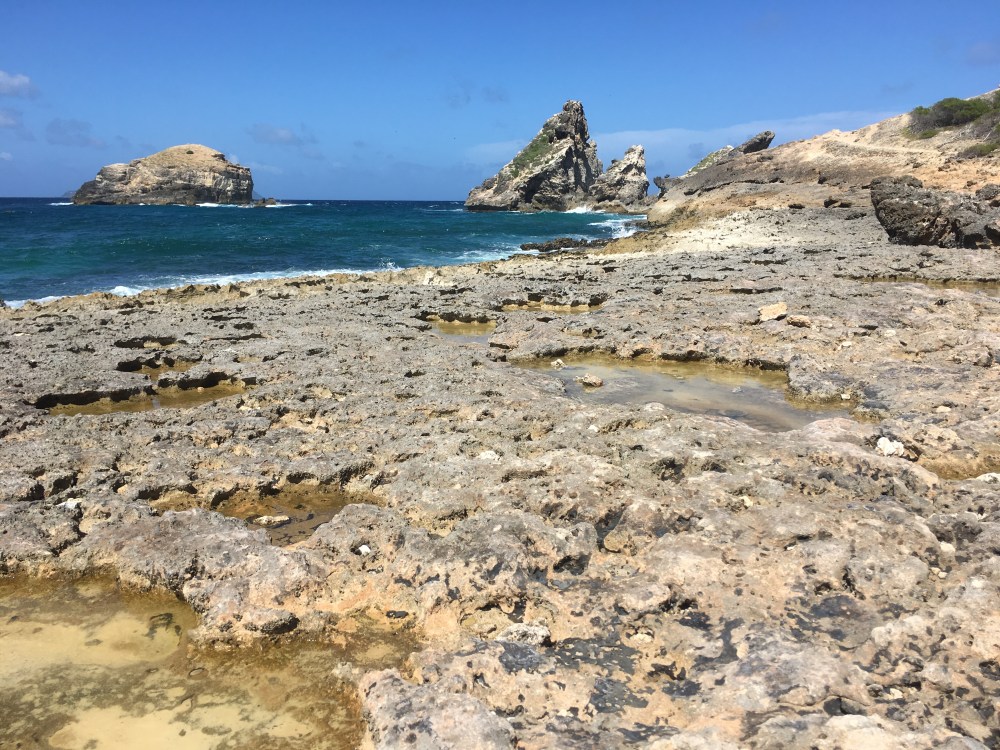
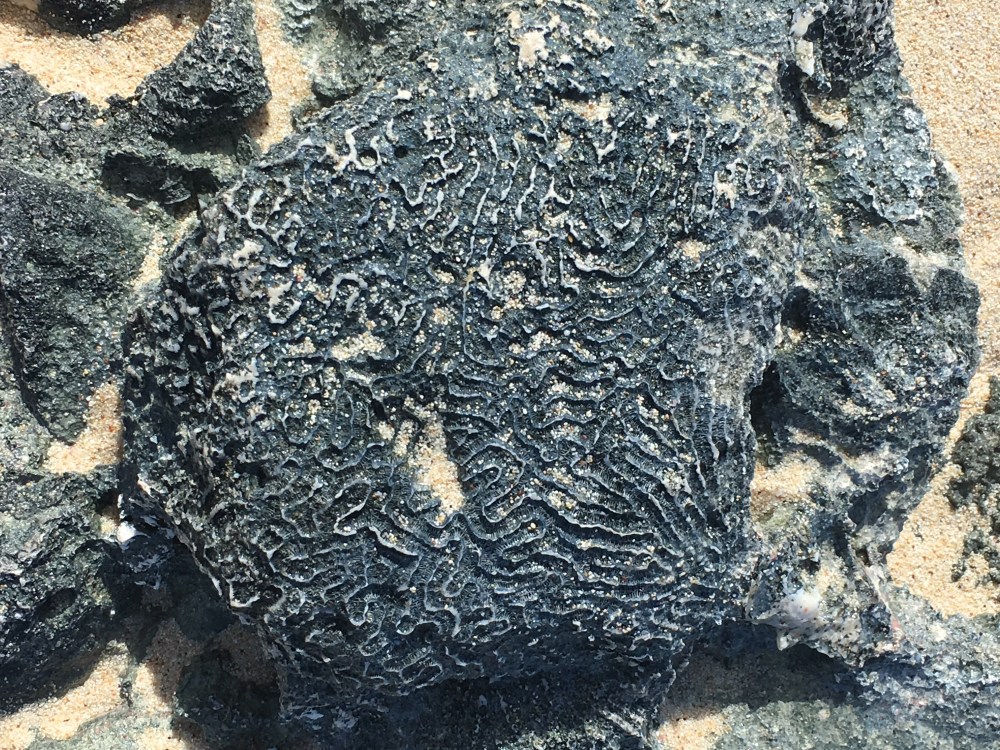
There was a giant cross on top of the rocks. And a little anse (C shaped beach in French) with waves crashing in, surrounded by a very alien looking landscape of volcanic rock and fossils of corals.


Here there was this lady selling incredible coconut and passionfruit sorbet.
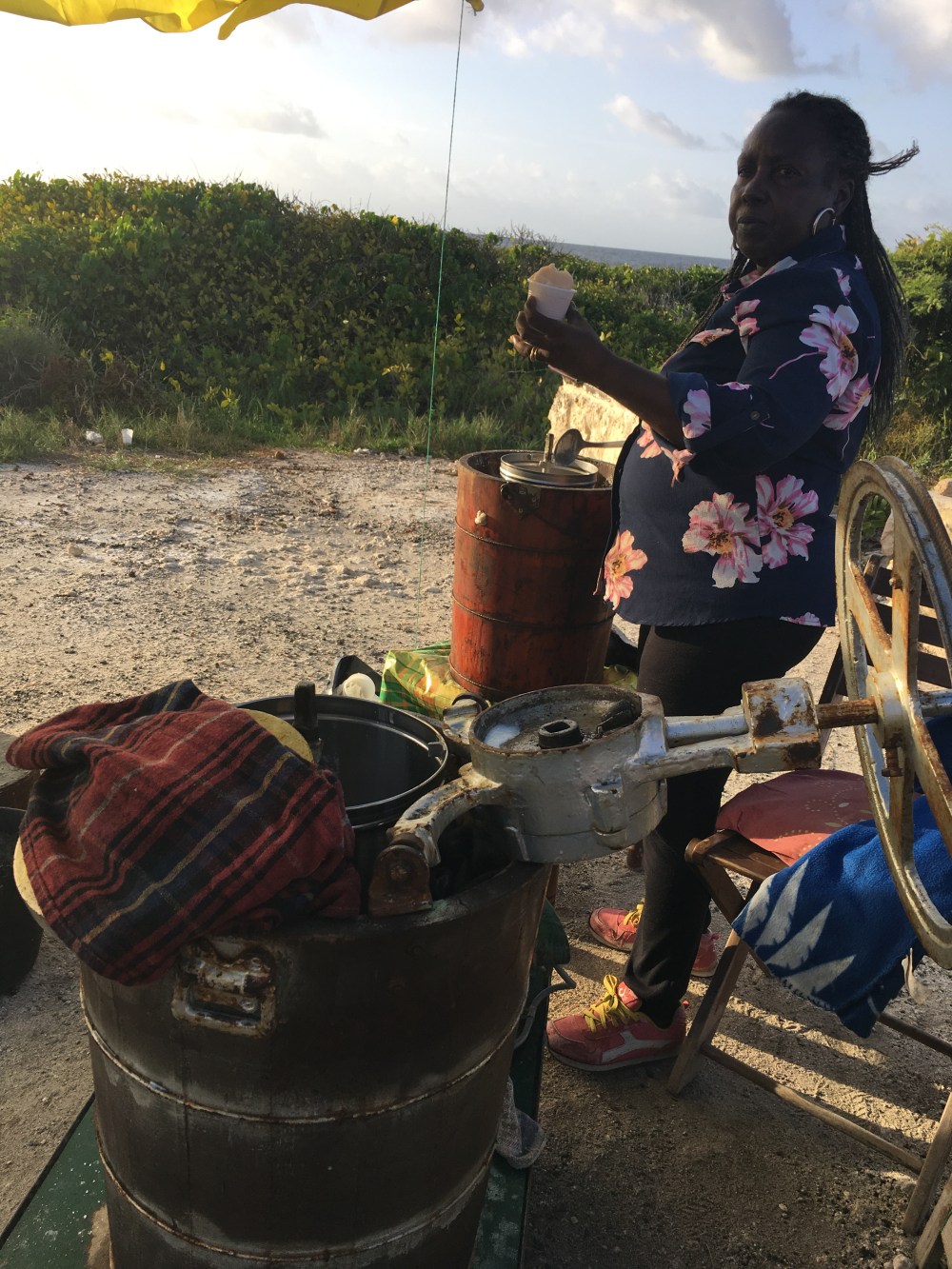
If you have one day to spend in Guadeloupe, come here.
We also tried snorkelling here. The visibility was great but there was so much current! I don’t like seeing fish move sideways. So, I gave up rather quickly, and dried my clothes on the weed like the trend here (pretty smart, the clothes don’t get dirty in the sand!).
As the sun went down, the locals came with their chairs and loungers and mats, food and the intention to party, while the white (now mostly red) people left from laying on the sand like corpses, in the sun all day, tired and worn out, and now going to eat some exotic poisson of the day.
Then one of the days we went on a drive to the north, we went to Deshaies, not pronounced “De Sha ees” like I was calling it. Its actually pronounced De he. Obviously. French. It was a very nice little village, with a very distinct character of pop coloured shops such as this one.
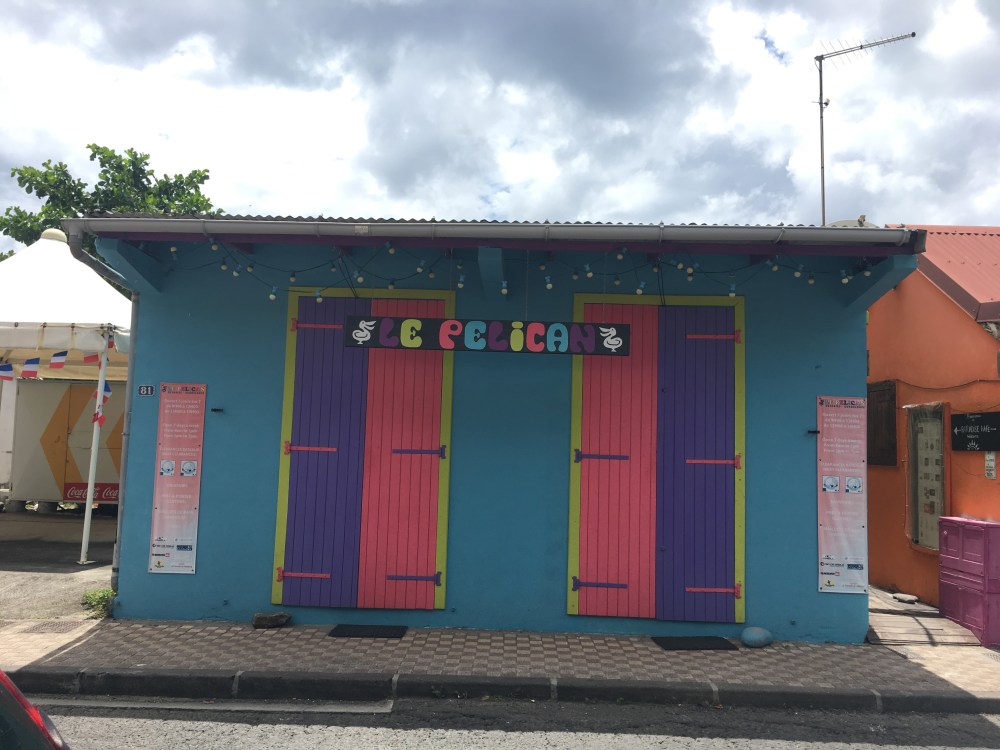
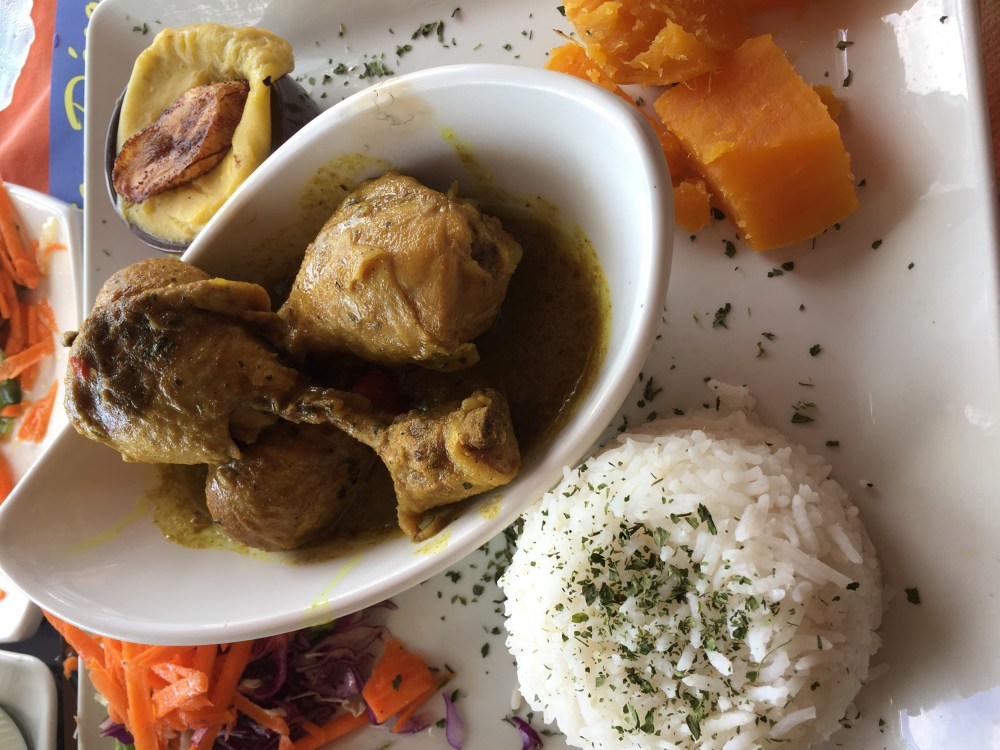
De he was apparently the paradise in BBC’s show “Murder in paradise”. We ate Poulet Colombo here served with banana mash, and it was sooo good! It was actually very similar to an Indian curry. We didn’t see any Indian restaurants here, I was practically convinced I was the first Indian to set foot on the island, and I wondered the origin of this dish. I was proven wrong about being the first Indian on this island on the very last day of our trip. Keep reading to know that interesting story :P.
On our way further north, heading east, we found some nice beaches, body surfed the 1 m waves, and had a great day that day.
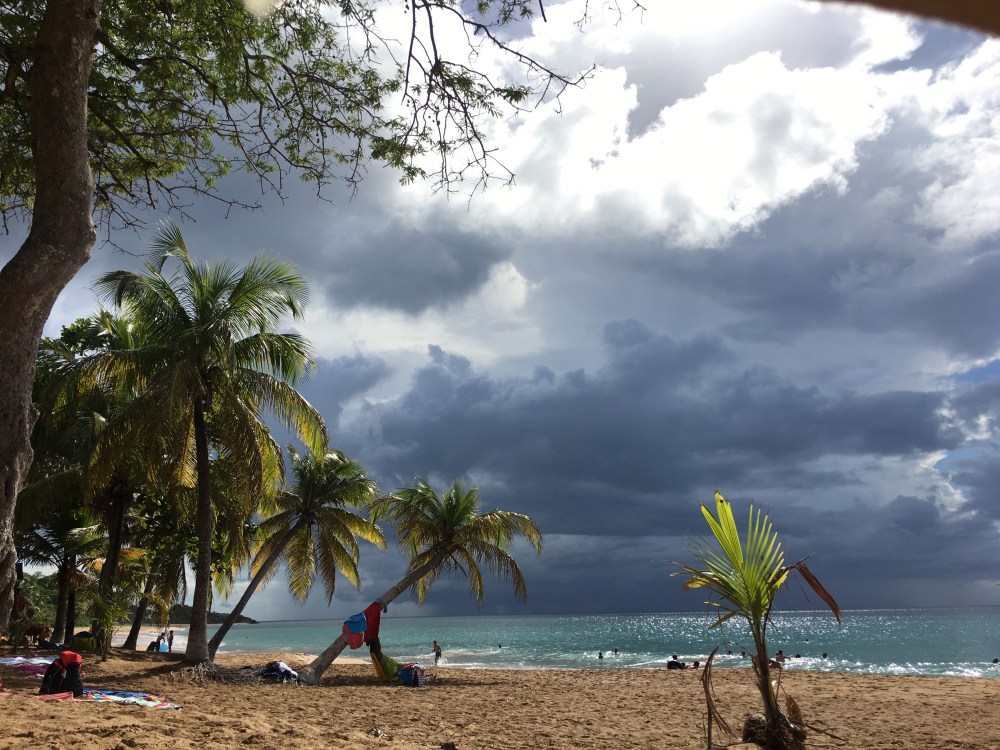
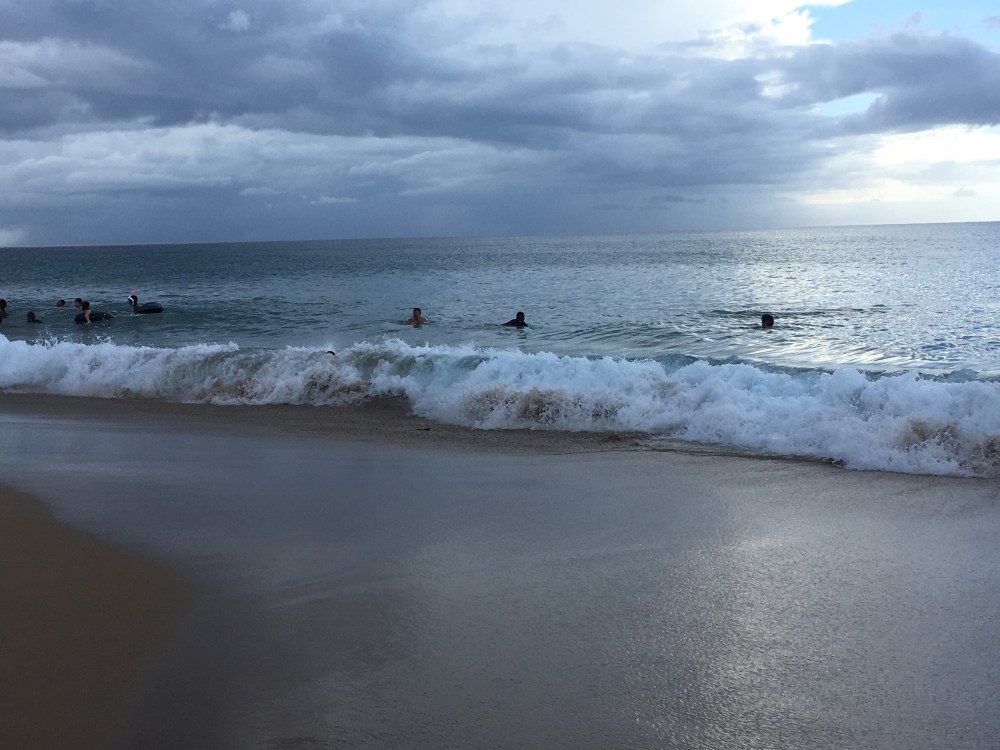
I actually found it very interesting that on the same island, one could find sand of every colour. Where we were staying, the sand was black. As we went north there were sand coloured (like beige) sand beaches. And the sand was white near the Pointe des Chateaux (the place I mentioned above).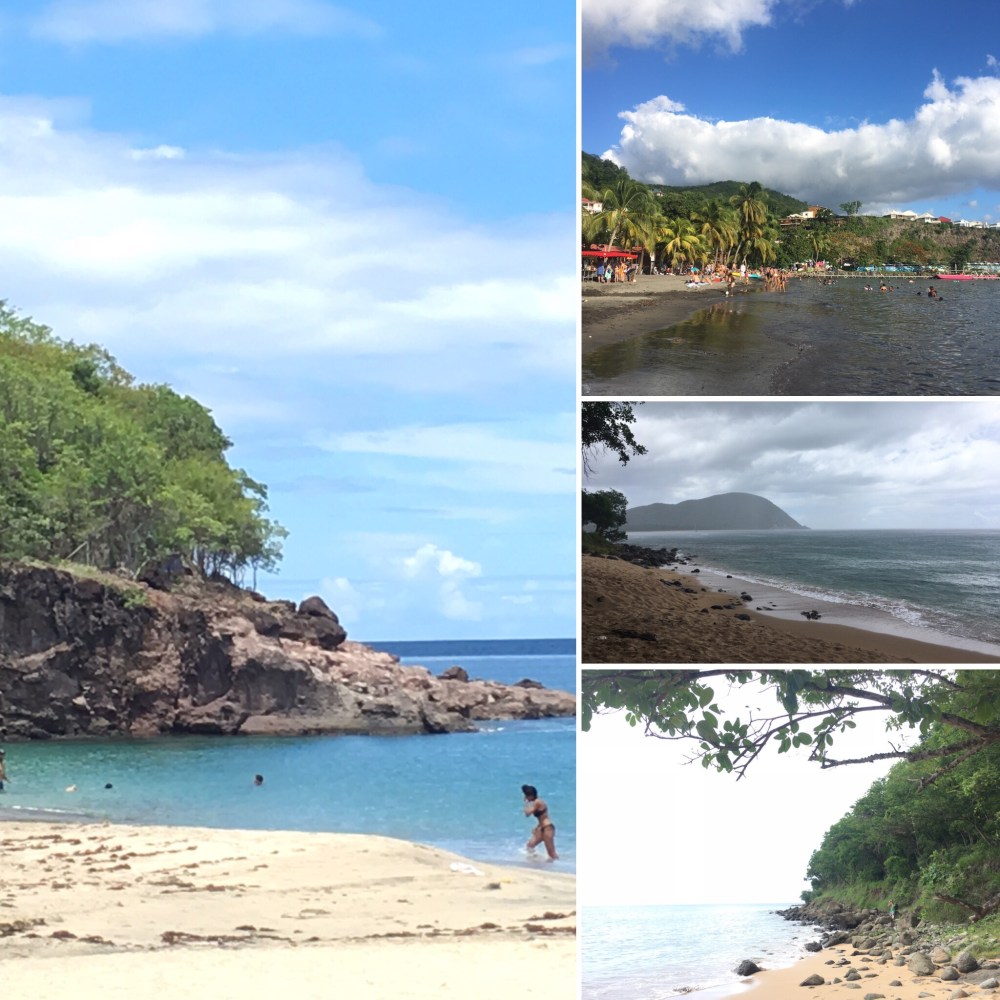
The vacation was over. We were back at the diving school. 6 more dives (I was actually itching to go back in the water). This time around, we saw a barracuda couple, another turtle really close, and this strange creature that changed its colour and shape when one held in your hand.
Strange creature specific to the Carribean
 Barracuda couple: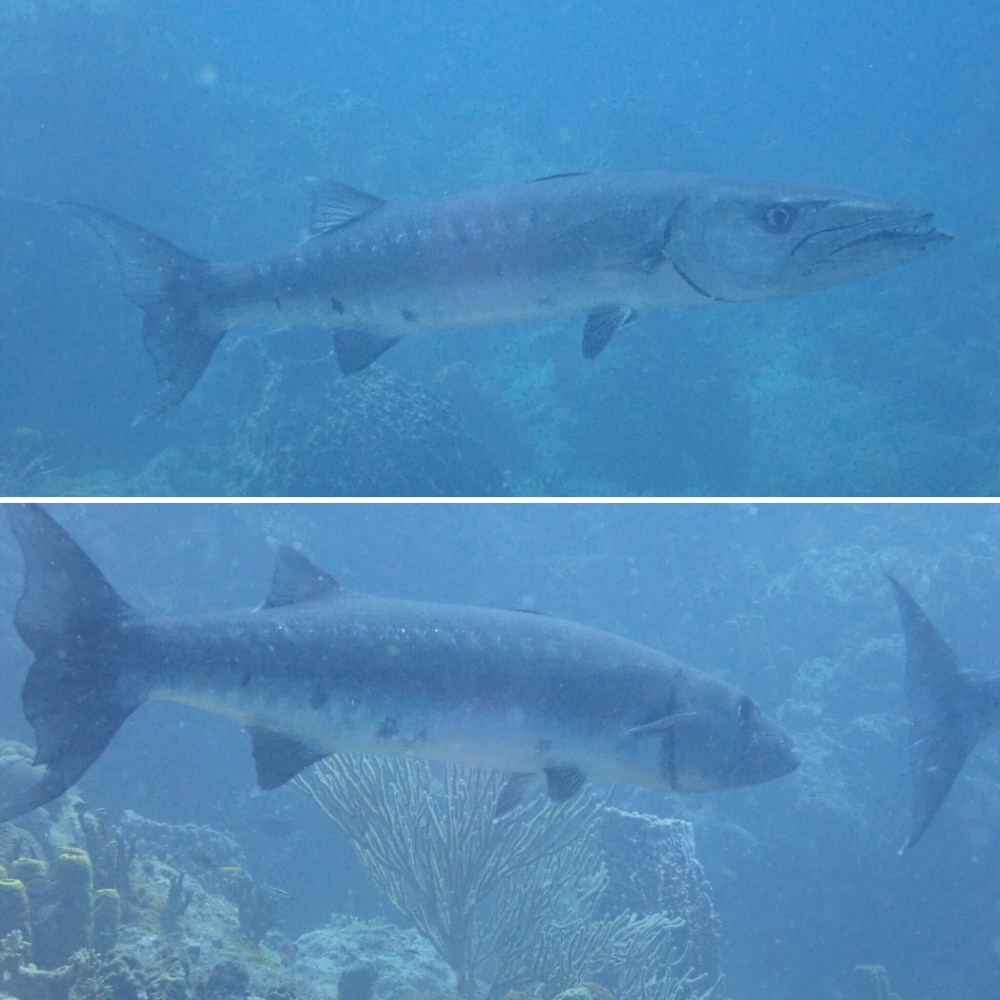
Turtle up close: 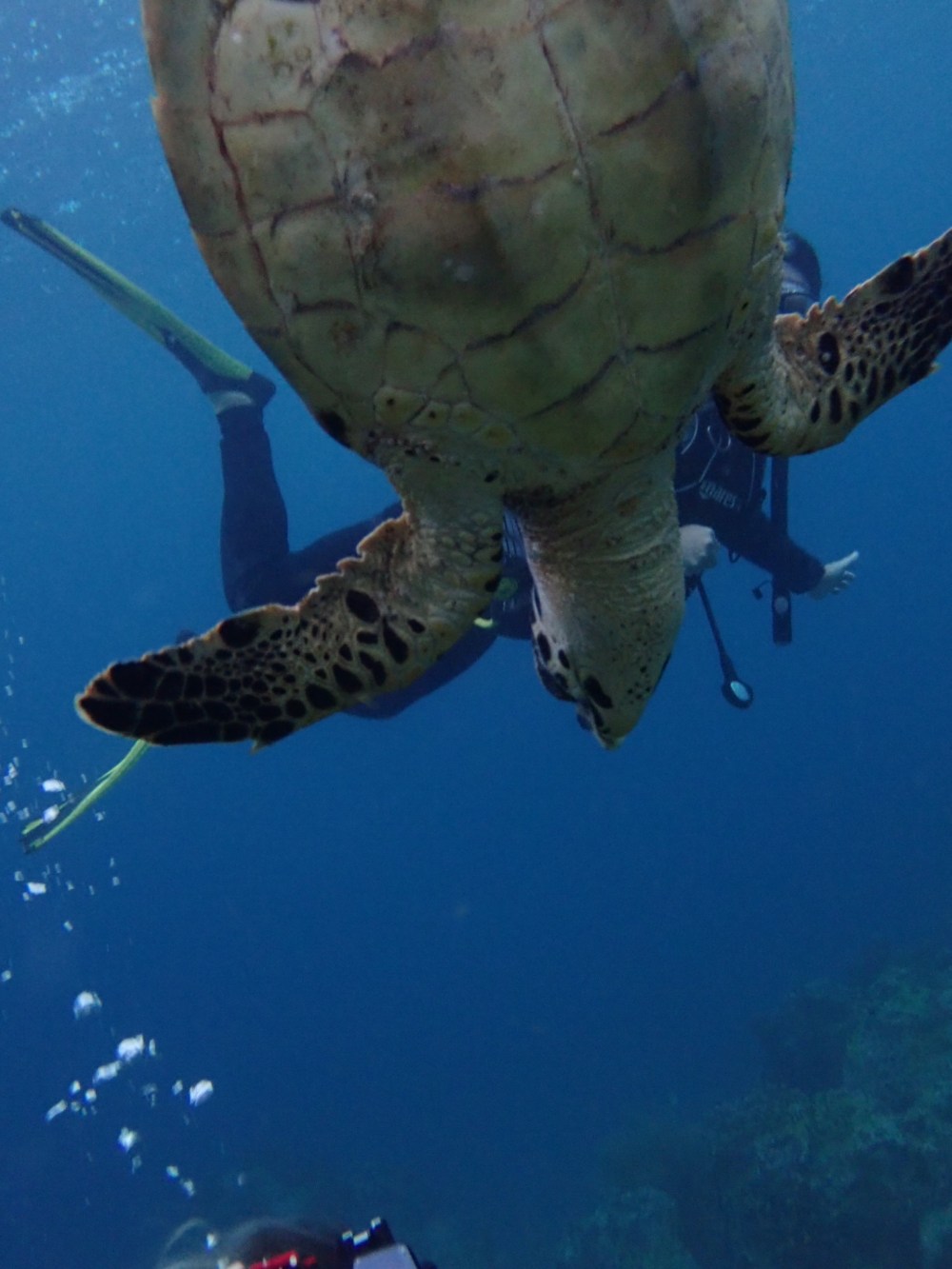 It was eating coral, then we saw it going for a breathe, and it came back right next to us.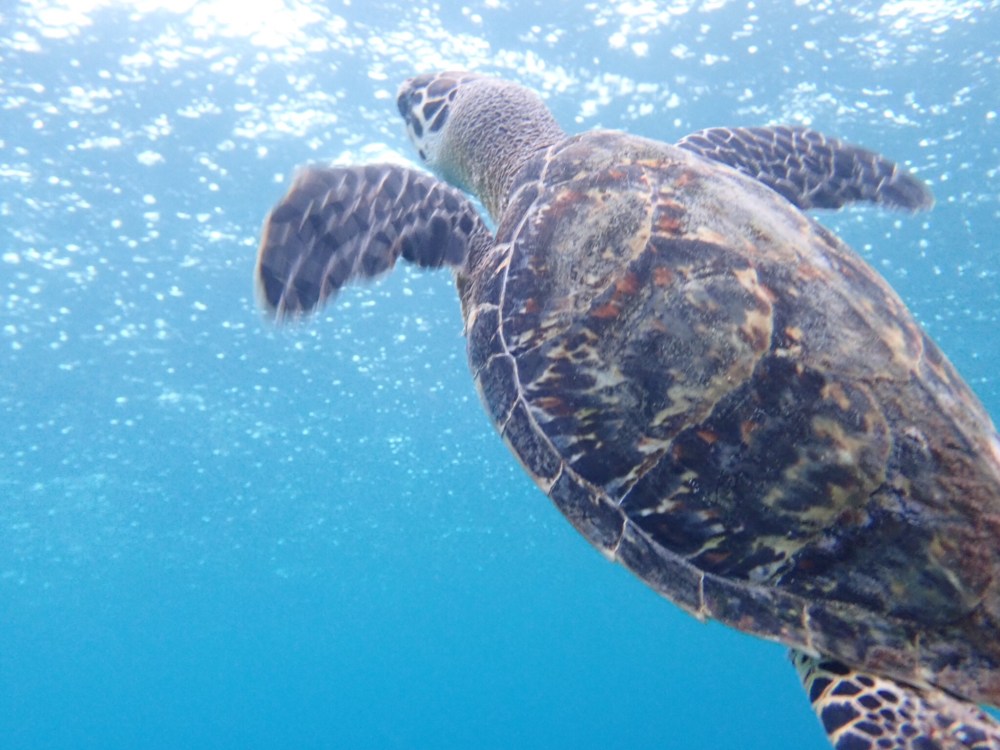
We also did one dive all by ourselves (no dive master), which was a bit intimidating to be honest. The sea seemed expansive, rich, but also had big patches of “desert”, where we saw a sole fish, very expertly hidden in the sand (top left in picture below).
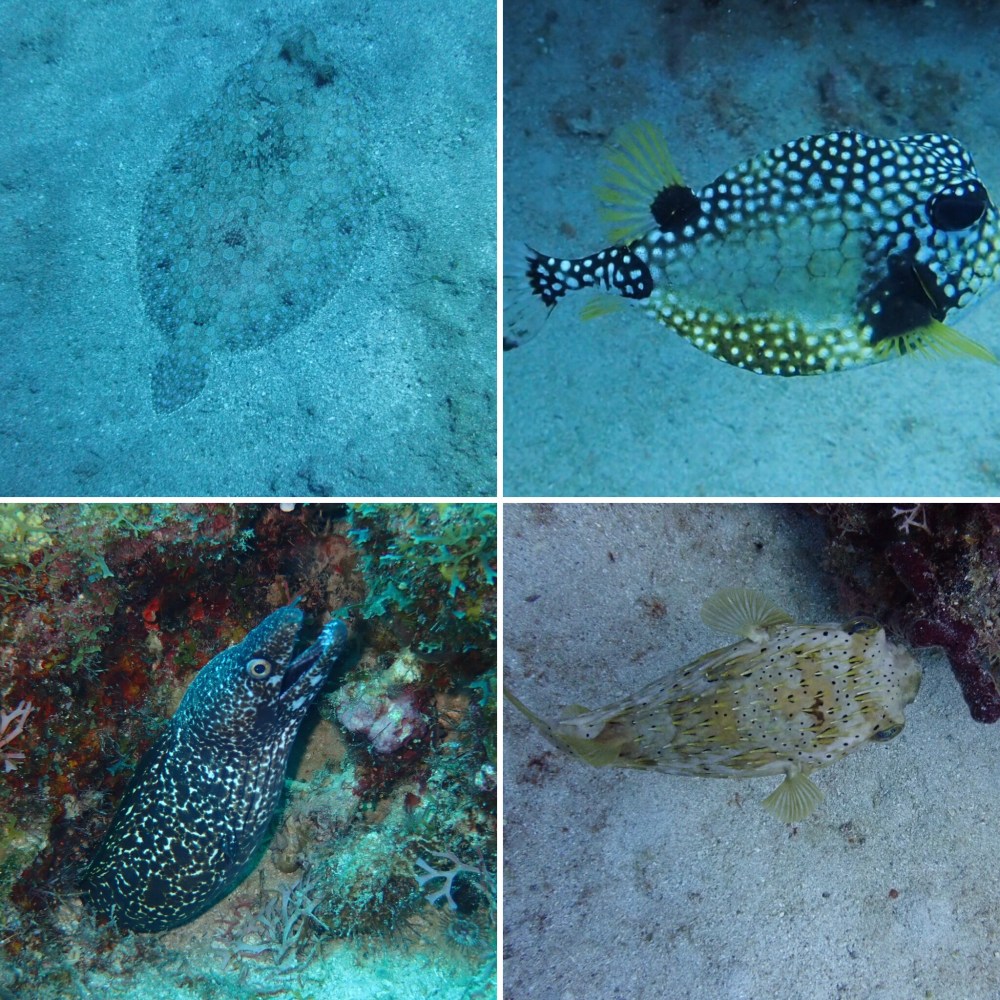
Some other fish, including puffer fish (top picture, bottom right), big Morray eels (top picture, bottom left), Cavalier (bottom picture, top left), and some other fish. 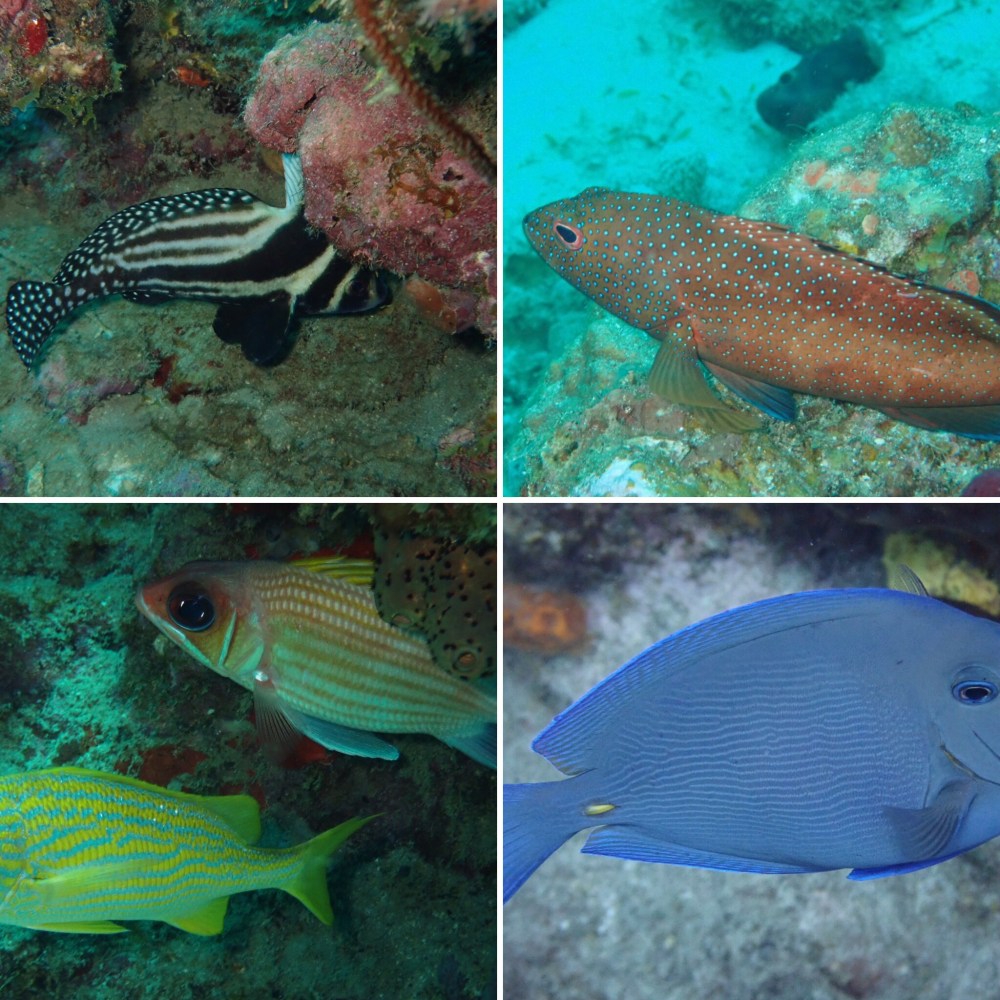
All the pictures until now were in or around the Jacques Costeau marine national park. Jacques Costeau is the father of scuba, he came up with most things that make scuba diving easy today.
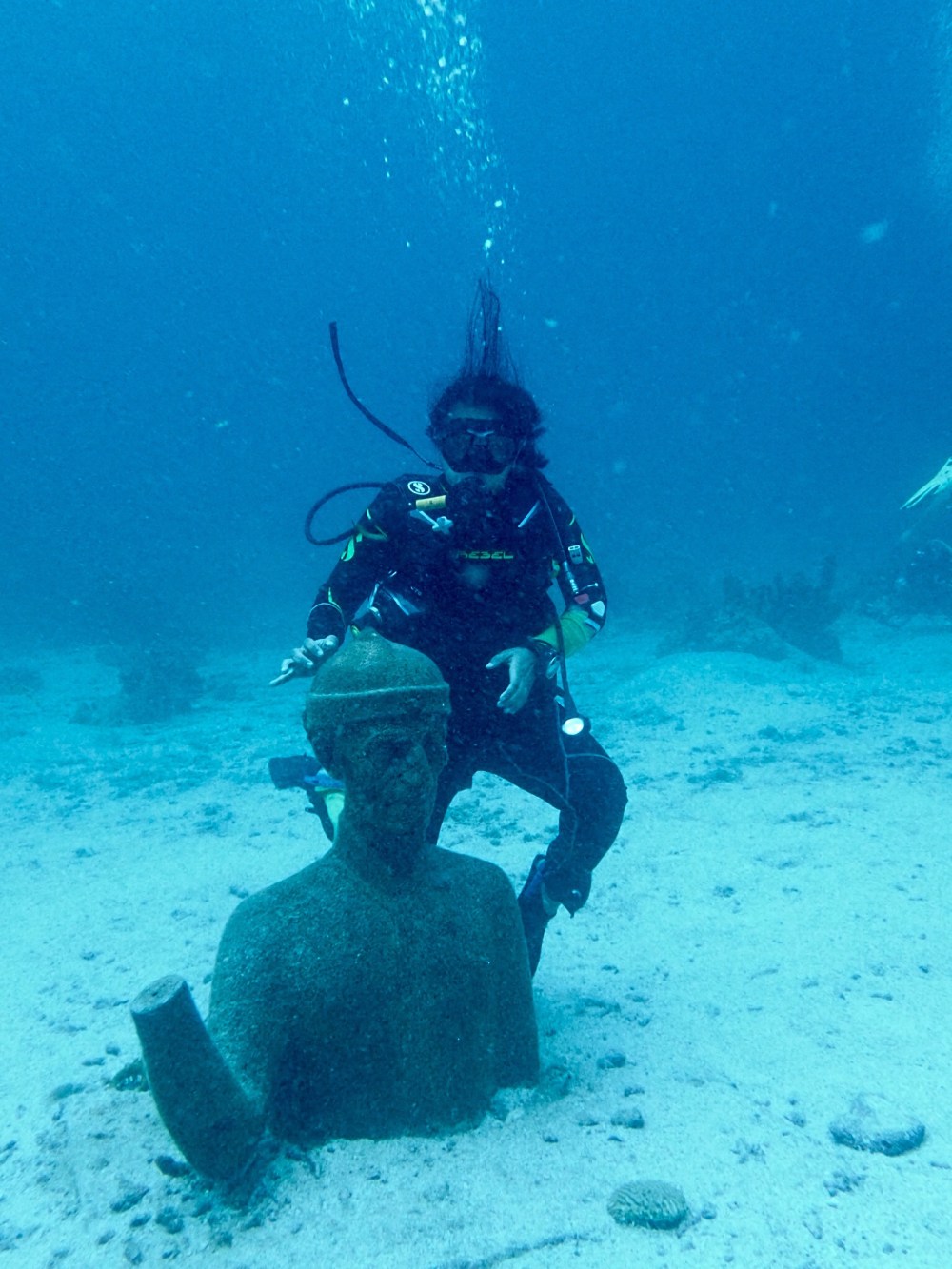
We also dived at two wrecks, one at 23 m and the other at 33 m. I am convinced I love wrecks. The way coming up was a bit intimidating though in both cases, one time my mask broke and I snorted in lots of sea water, and the other time there was a very decent current that the bubbles went behind us instead of going up.
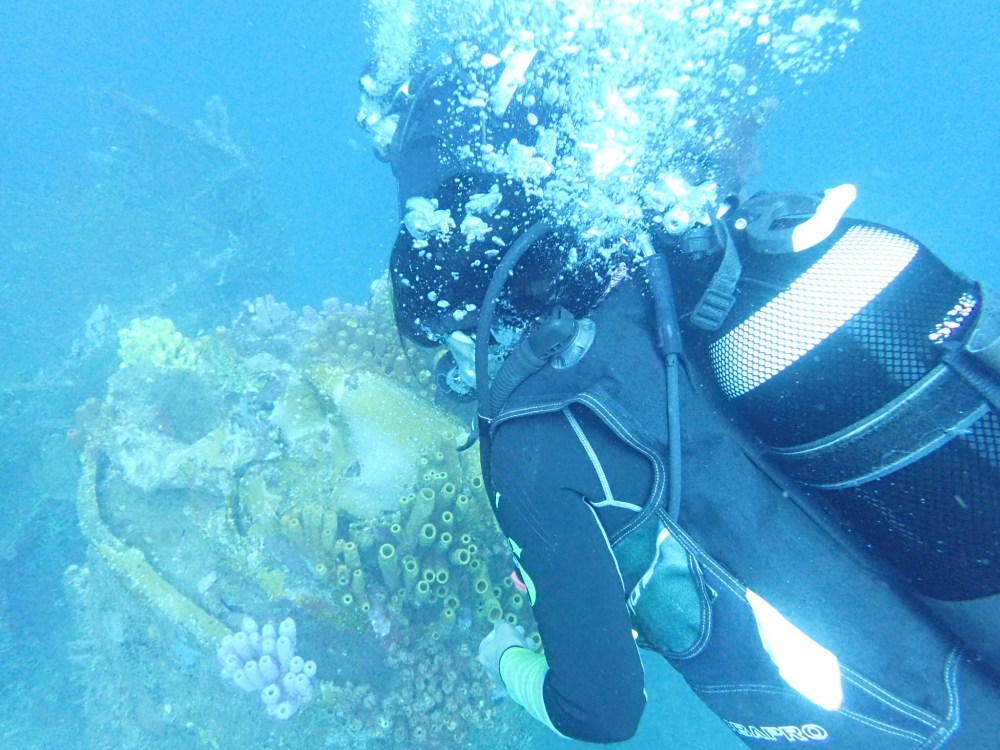
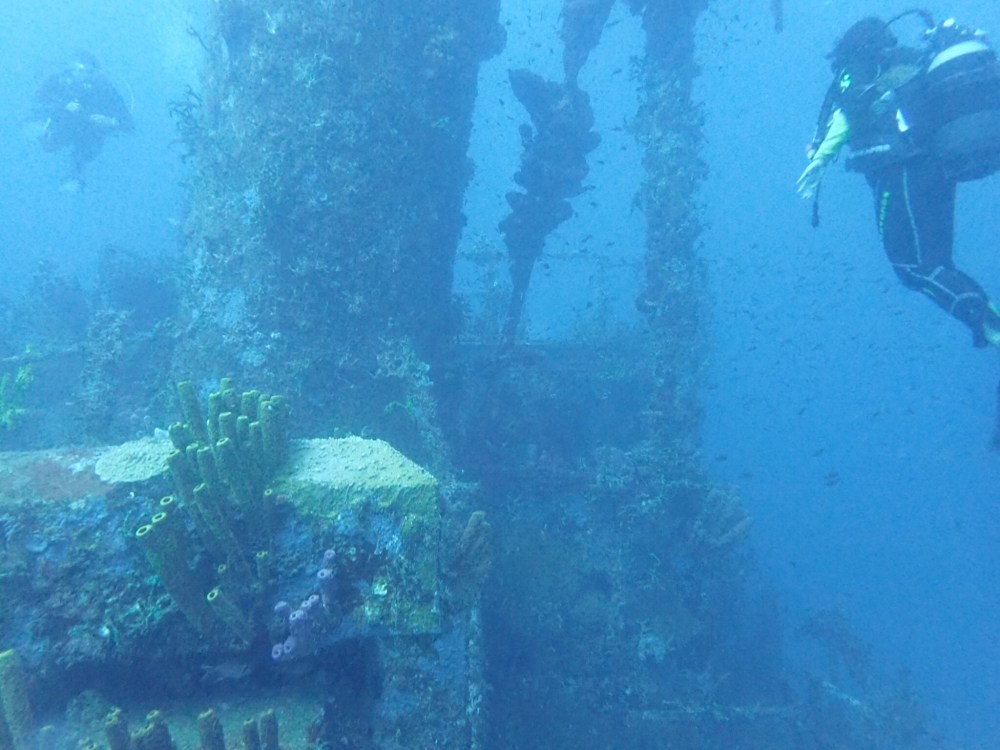
Both wrecks were submerged around 2006 and both were so full of life. There were corals garnishing every railing as if the ships were decorated for an event. One could see the toilet and the hulk and ladders and balconies. It looked like a movie set! And one could go up and down and look at it from every direction (the perks of diving). I want to become a better diver just to be have more bottom time and for that BBC documentary I dream about.
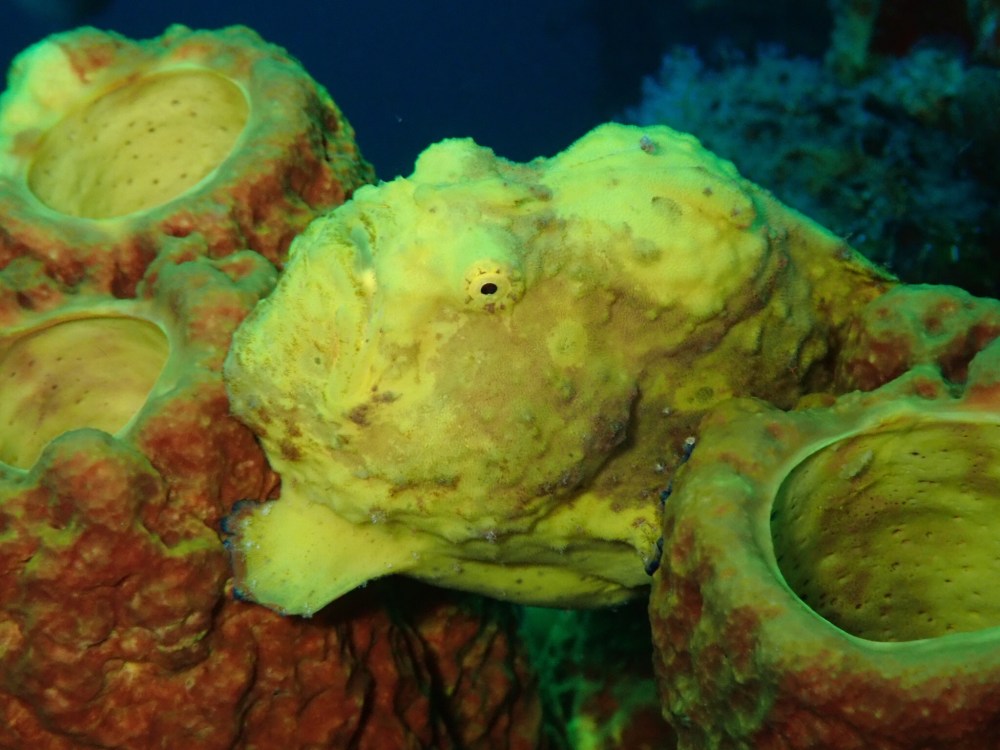
Many fish have built their homes in the wrecks like this Frog fish, which can’t swim (only crawl) and just takes up the colour of its surrounding while its growing up. It was may be 6-8 cm big.
Everyday when we were diving, we were done around 3 pm or so. After our dives, we would “dive” in the pool, paint ugly pictures, go to beaches, snorkel, get lost in the jungle looking for a waterfall that is “not touristy”, have insanely juicy fruit and insanely good milkshakes, etc.
Figure diving in the pool:
Snorkeling around the Petite Malendure beach in the Golden light, where the corals shone and the fish cast shadows on the sea bed.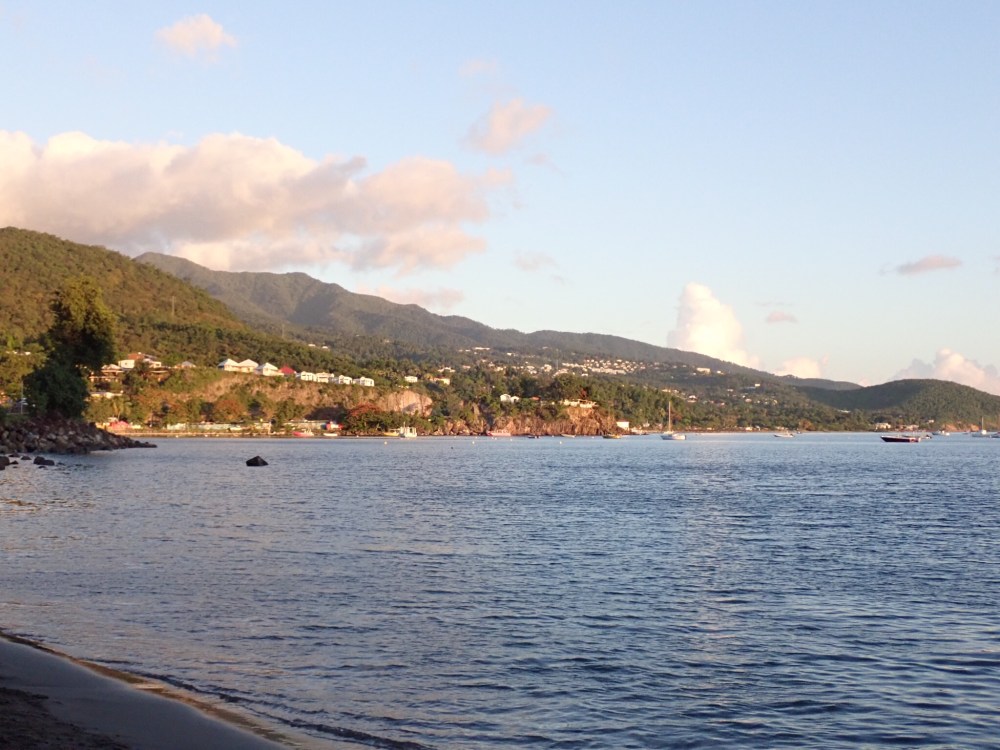
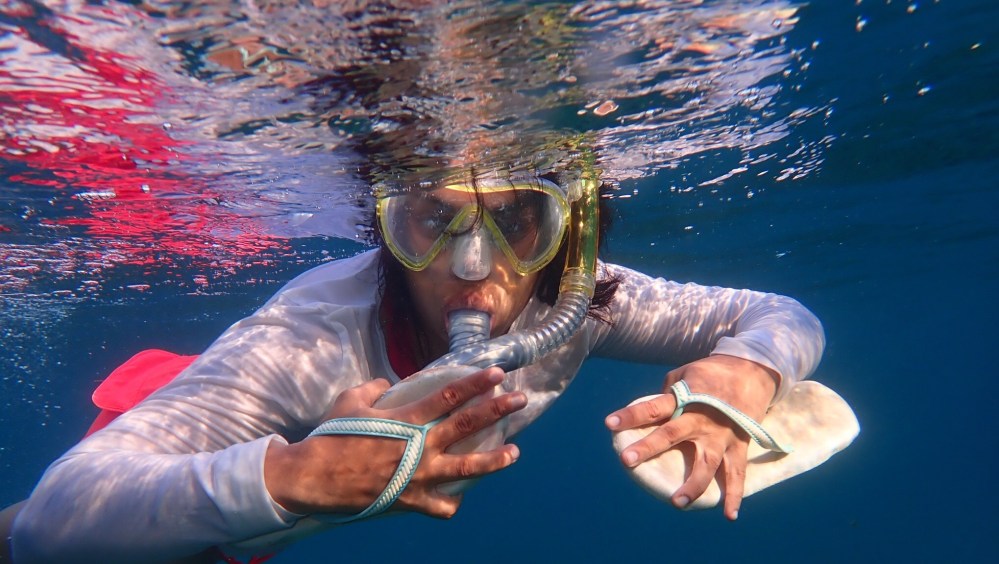
That’s the new trend in snorkeling:
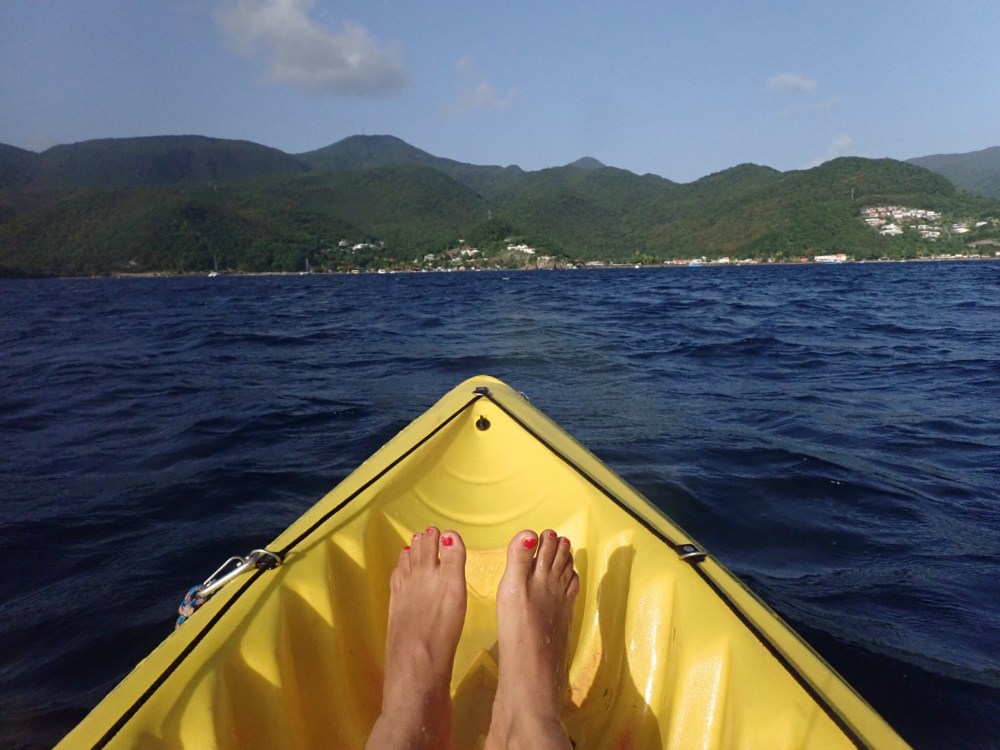
Then one of the days, we went kayaking from the Malendure to the Pigeon islands. It was one of the activties, where you willingly go into, but in the middle of it ask, whose idea was it. It was about 1.5 km to the islands, so much exercise. But then there are some nice spots to snorkel.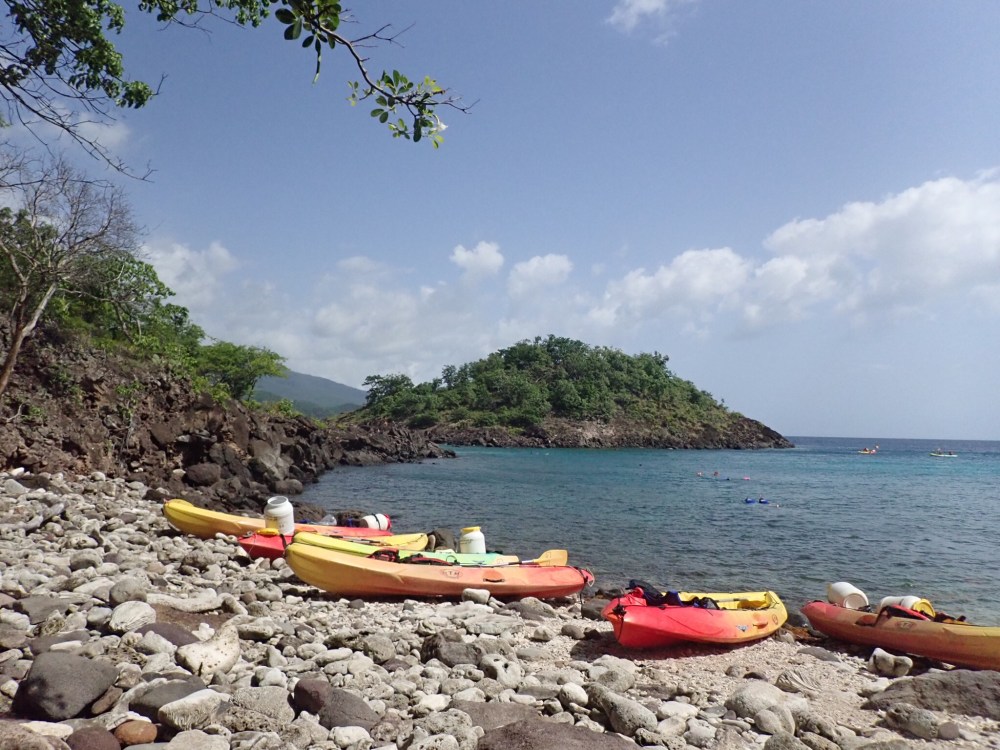
We saw parrot fish fighting with a “snake”. Snake in quotes because swiss bunny insisted there are no sea snakes in the Carribean. 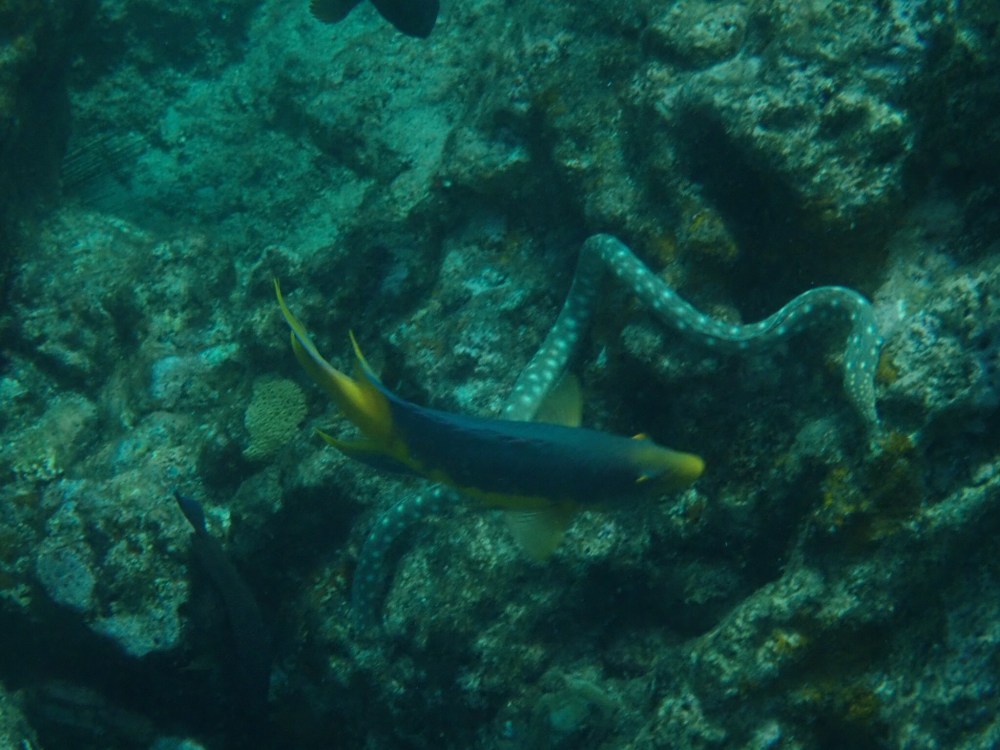 On the way back, I pretty much did nothing, just took pictures, I think the current brought us back. 😛
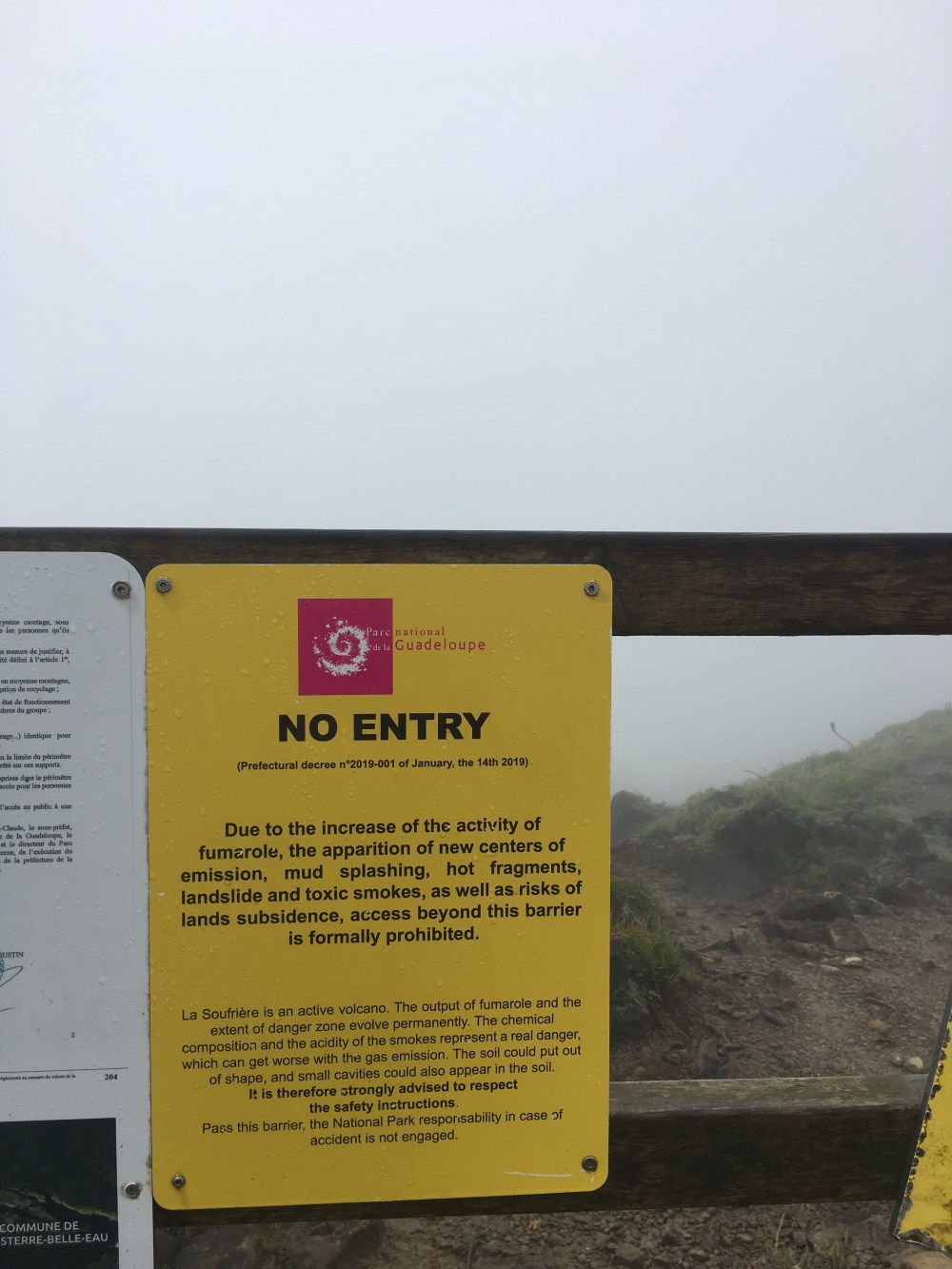
The day before we left, we went to hike the active volcano on the island, La Soufrière (something to do with sulphur in French). It is a 100,000 year volcano, a baby according to geological time. I was so excited to be climbing an active volcano, but all we got was clouds, and the smell of fart.
The hike was technically quite challenging with me having to go on all fours but the sights were pretty, such as this gorge, which has a crystal cave below (I so want to go there!!!).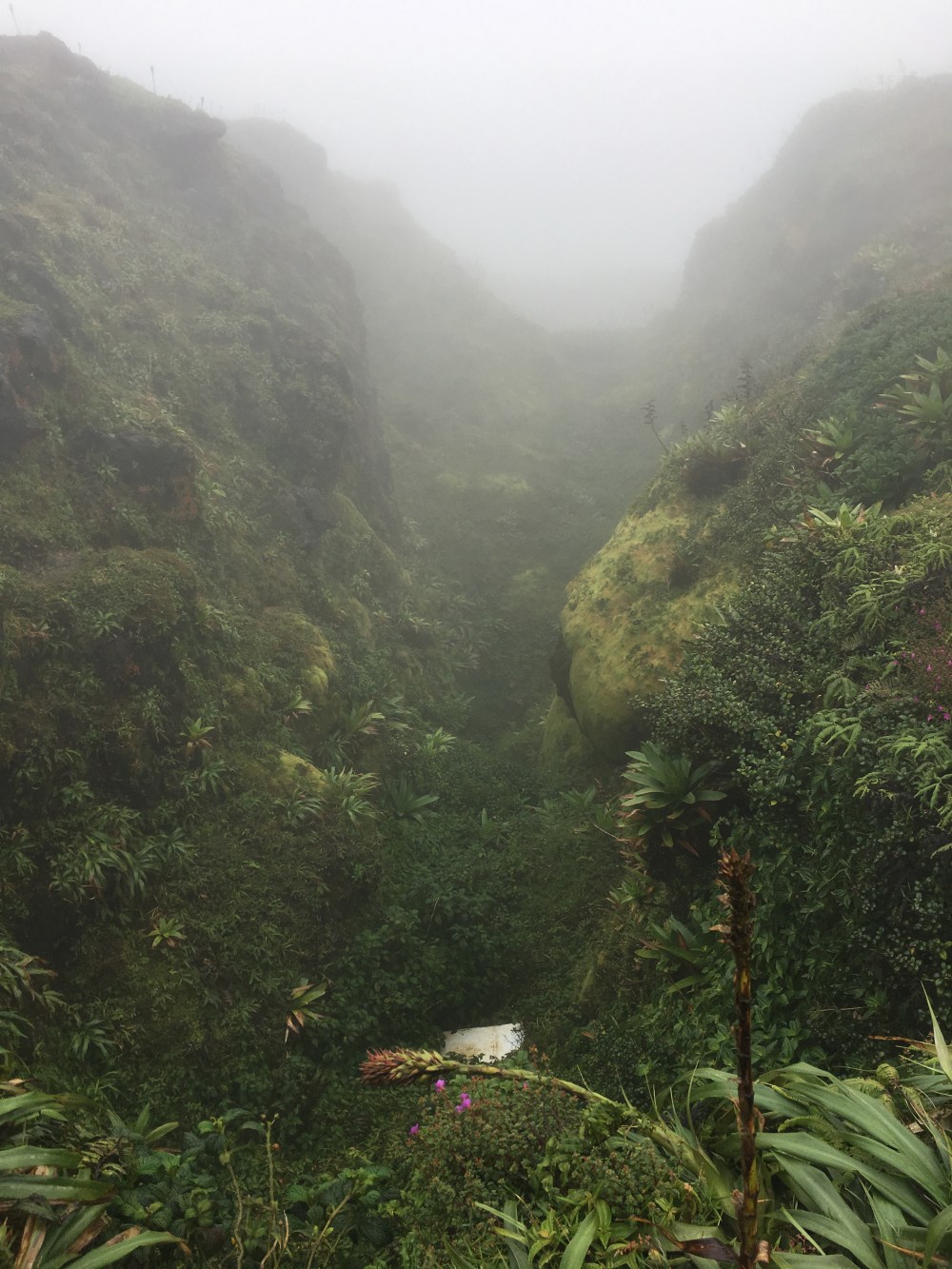
The best thing about the hike was my Prince: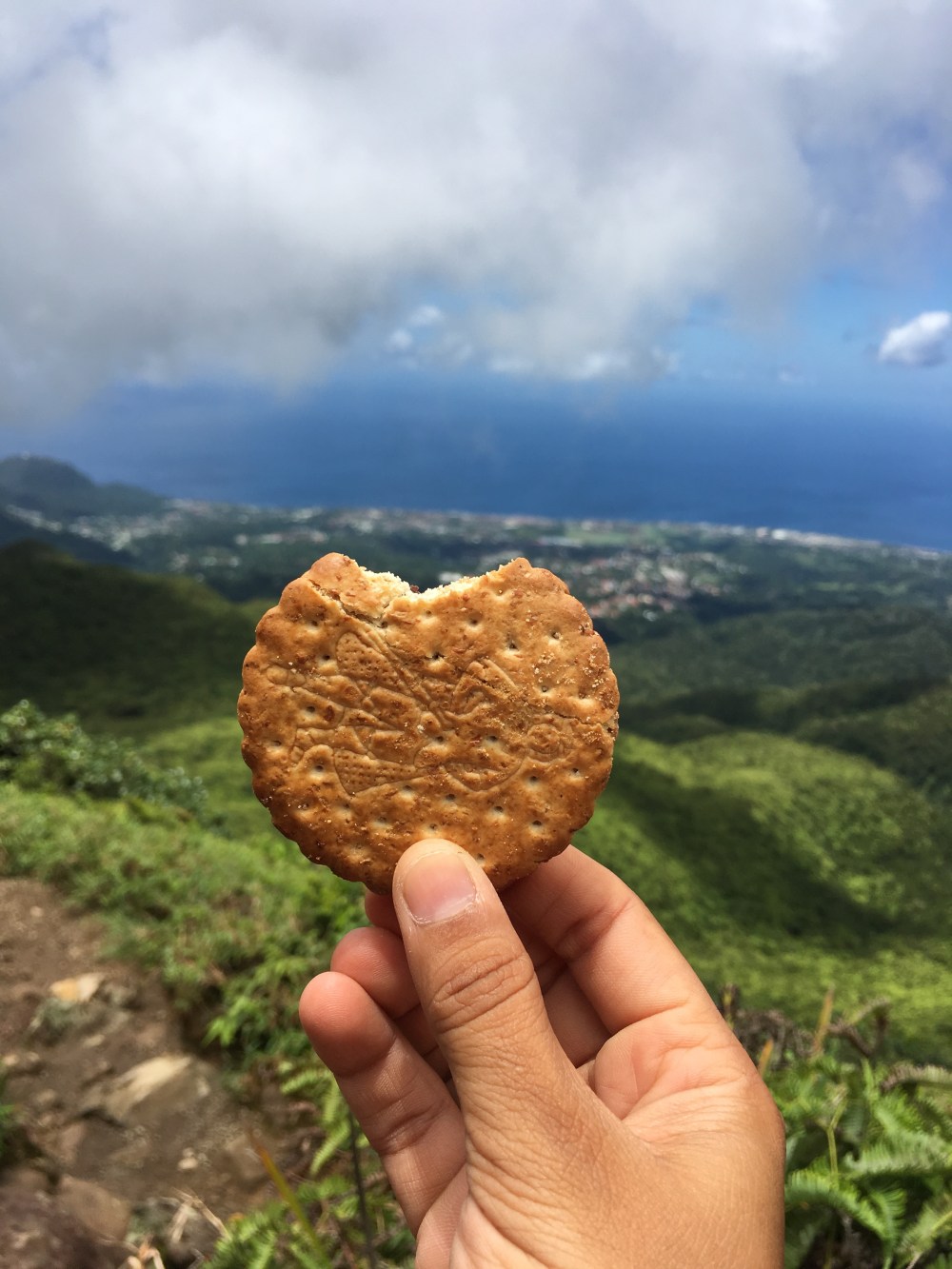
On the day we were to leave, we went to the Memorial Acte museum. It won the best European museum award in 2017 and its tells the history of slavery in a very very artsy way. There were no pictures allowed inside but the grafitti on the building next to the museum summarizes it :
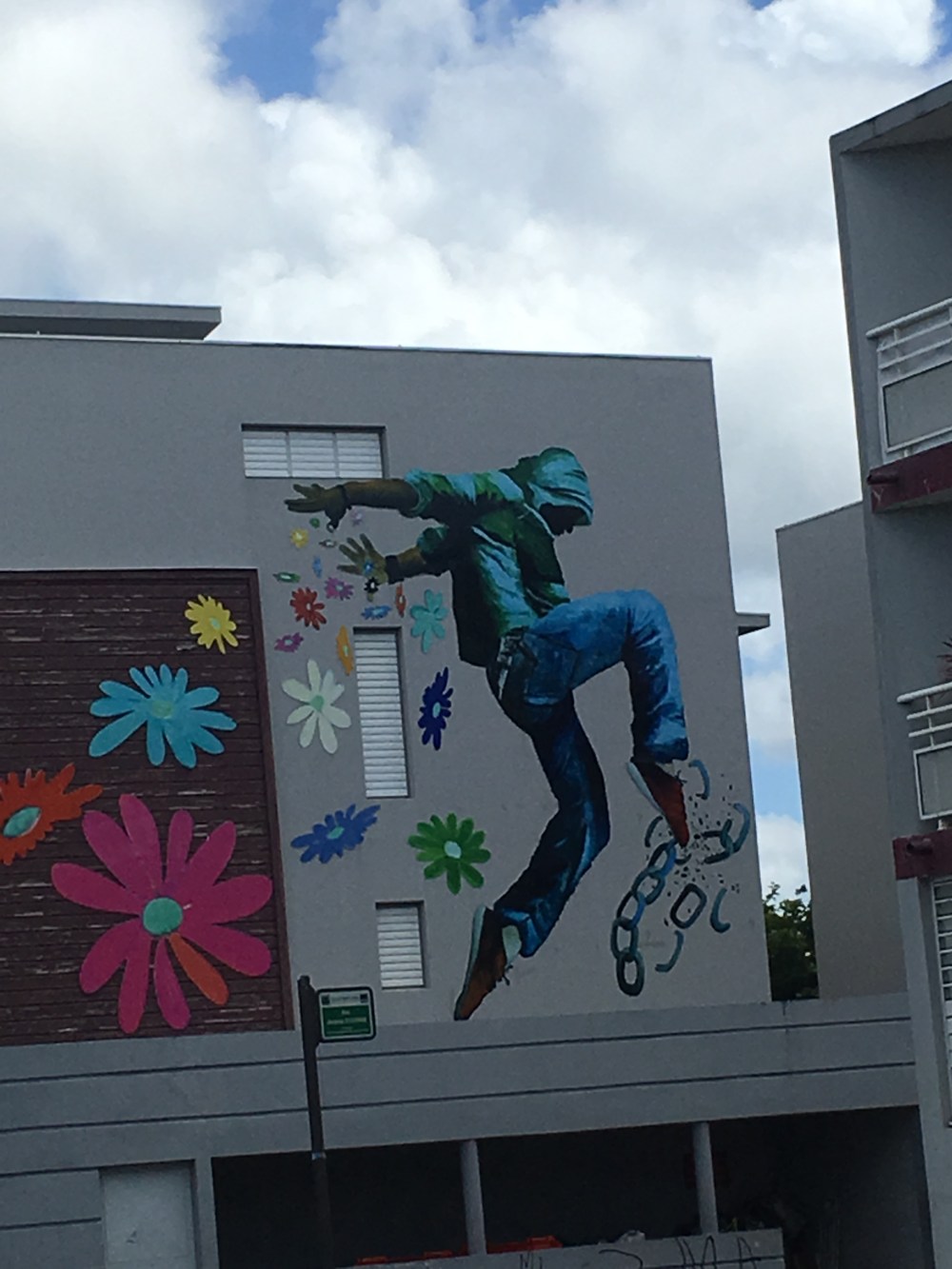
After the abolishment of slavery, many many Indian workers came to Guadeloupe to work in the plantations as cheap labour in the early 1900s. So, unfortunately, my myth of being the 1st Indian here was shattered. :))
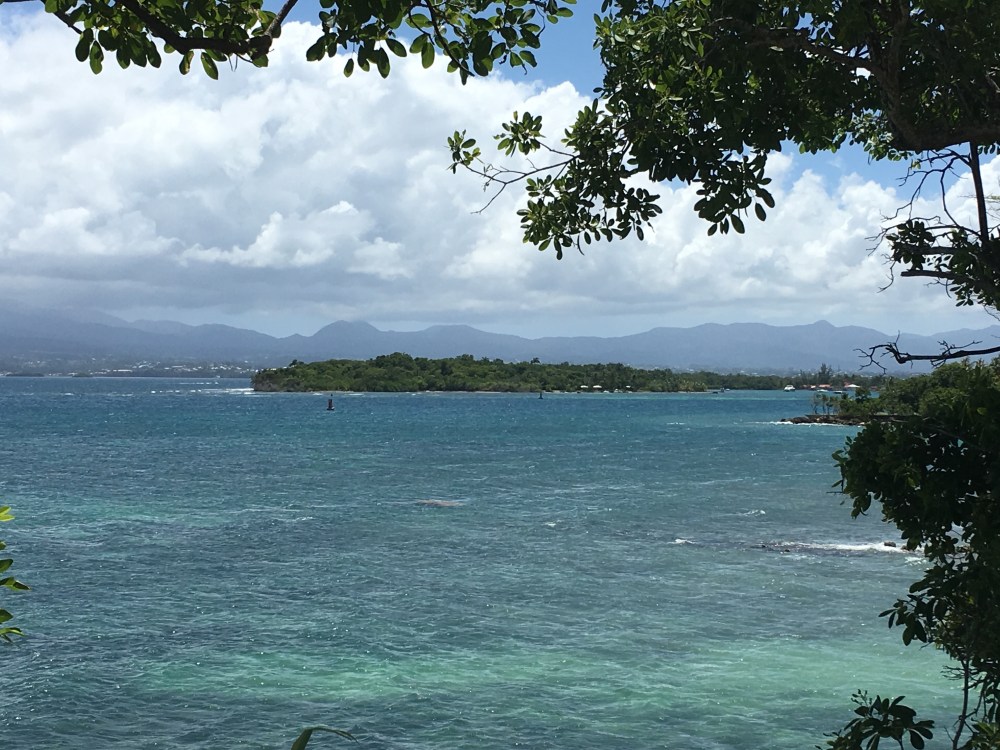
And with that last picture taken, it was time to say goodbye.
Perhaps we would never go back here again as there are many more seas to see, but the multi-coloured sands and waters, the rolling hills, the winding roads, and the beautiful fish, will remain in our memories, like a dream, like this turtle I never saw. 🙂
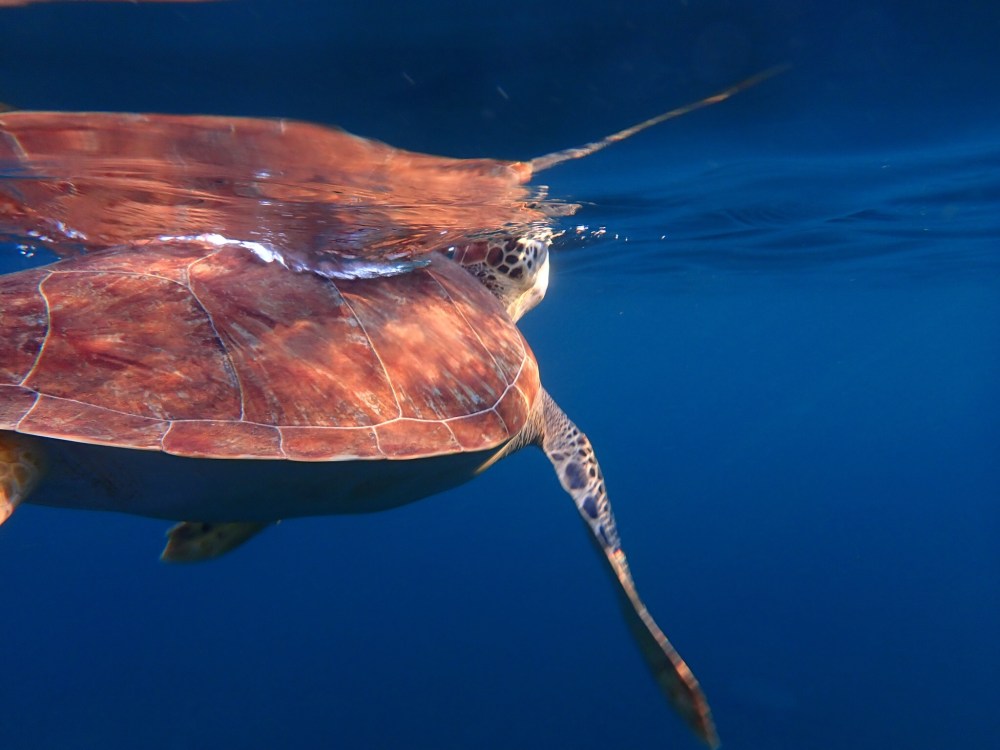
All underwater pictures by #mottetphotography.

 bunnygoespoppoppop
One thought on “Bunnygoesplop in the Carribean!”